
Costa Adeje
Sun almost all year, beaches and services, 17–22 min from the South airport. From here you reach Los Gigantes in 25–33 min and the Teide cable car in 53–69 min.
Alternative: Puerto de la Cruz, if you prefer a town and the north.
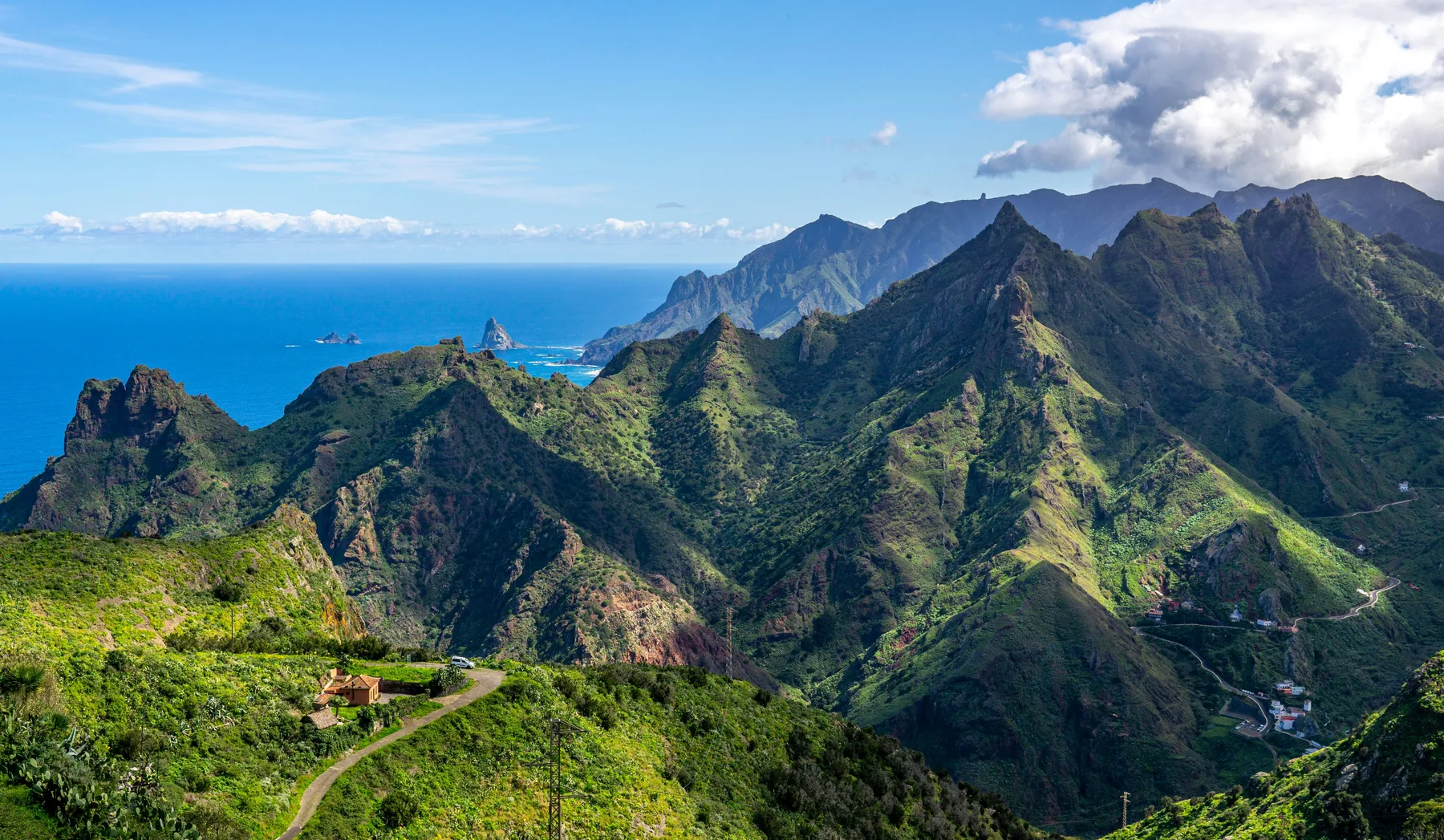
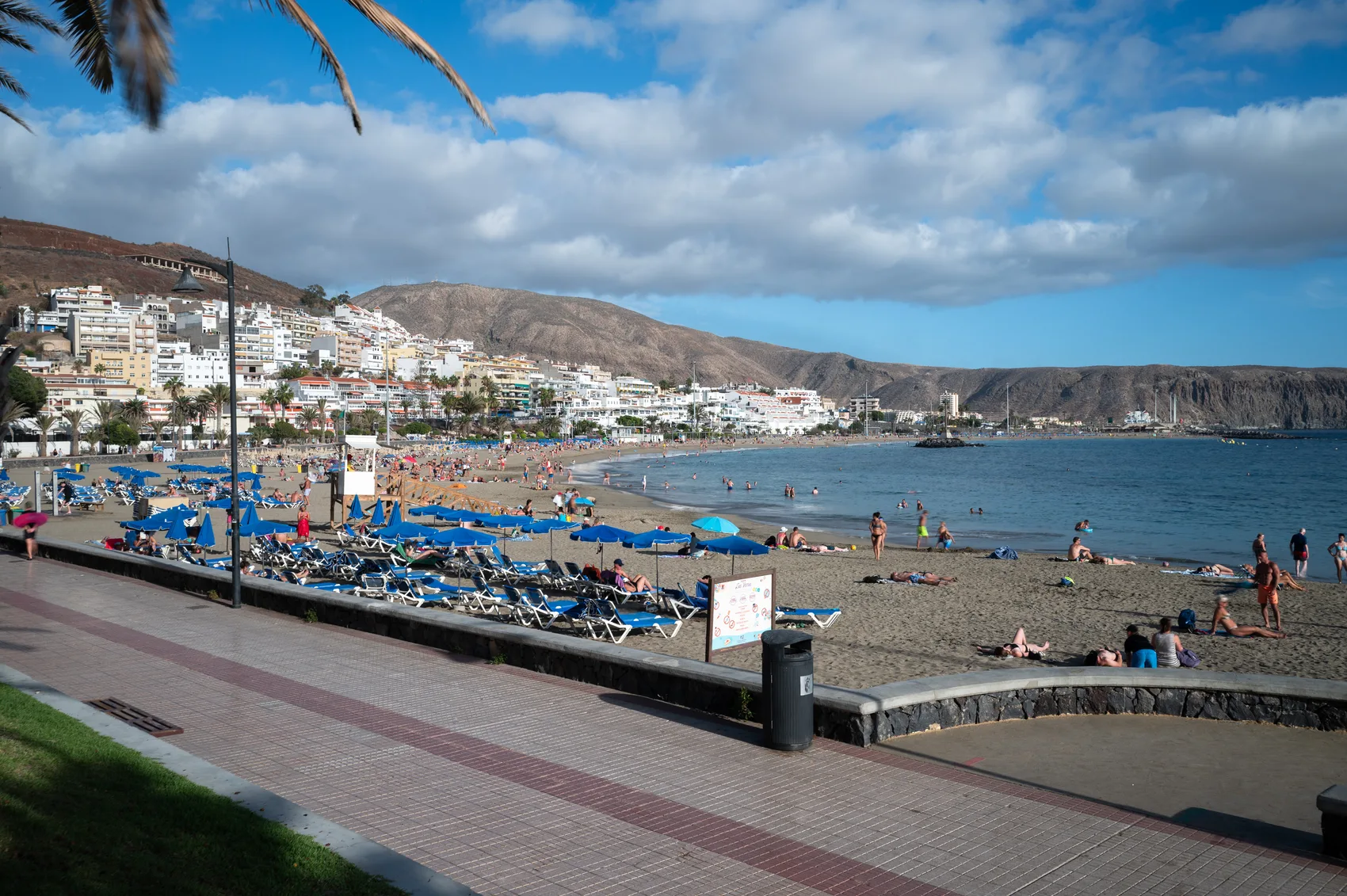
Guide to choosing accommodation · Tenerife
Tenerife is a small island with two climates. Sleeping in the north or the south changes how much sun you get, whether you need a car and what your evenings will be like. Choose the area first; the hotel or apartment comes afterwards.
Rainfall: AEMET normal values 1981–2010. Drive times: our own estimate using OpenStreetMap data, without stops. Checked on 6 October 2026.
Quick answer
These are editorial recommendations, with the reason and an alternative. Further down we explain each area and when it is not a good fit.
Sun almost all year, beaches and services, 17–22 min from the South airport. From here you reach Los Gigantes in 25–33 min and the Teide cable car in 53–69 min.
Alternative: Puerto de la Cruz, if you prefer a town and the north.
Calm sea, flat promenades and water parks nearby. They cost less than Costa Adeje (Arona hotels ≈ €136 against ≈ €186 in Adeje, INE).
Alternative: Costa Adeje if the budget allows; Puerto de la Cruz for Lago Martiánez and Loro Parque.
Cliffs, a harbour with terraces, sunsets and boat trips to see pilot whales and dolphins. It is the quietest base in the south-west.
Alternative: Costa Adeje for an upmarket hotel; La Laguna if you prefer a city and tapas.
You can get around on foot, it has a bus station, Lago Martiánez and Playa Jardín, and Loro Parque’s free train leaves from the centre.
Alternative: Los Cristianos for a beach break without a car; Santa Cruz and La Laguna, linked by tram.
Playa del Duque, Fañabé and Torviscas, with a seafront promenade and calm water for swimming almost all year, on the dry south coast.
Alternative: Los Cristianos and Las Vistas; El Médano if you like wind; Las Teresitas from Santa Cruz.
Anaga is 14–19 min from the Cruz del Carmen viewpoint, and the tram takes you to Santa Cruz. The Teide is between 50 and 70 minutes from almost any area.
Alternative: Los Gigantes for Masca and Teno; Puerto de la Cruz for the La Orotava valley.
Comparison table
Listed as in the guide: the south first, then the north and east, and the west last. Click a name to jump to its section. The price level is relative and is explained under the table.
| Area | Atmosphere | Type of traveller | Climate | Car needed | Price level | Pros | Cons |
|---|---|---|---|---|---|---|---|
| SouthCosta Adeje | Upmarket resort: big hotels, seafront promenades and shopping centres. | Couples, families and anyone who wants a hotel with full services. | South: dry and sunny almost all year. | Hardly needed in the area; useful for excursions. | High · Adeje hotels ≈ €186 | Playa del Duque, Fañabé and Torviscas beaches; Siam Park and Aqualand nearby; South airport 17–22 min. | The most expensive area; lots of tourism; far from the north (67–87 min to Puerto de la Cruz). |
| SouthLos Cristianos | A busy port town all year round, more everyday than Costa Adeje. | Families, couples and travellers without a car; day trips to La Gomera. | South: dry and sunny. | Hardly needed in the area. | Medium · Arona hotels ≈ €136 | Calm sea, flat promenade, ferries to La Gomera and buses; cheaper than Costa Adeje. | Fewer upmarket hotels than Costa Adeje; a crowded urban beach. |
| SouthPlaya de las Américas | Lively: the south’s busiest nightlife, with bars and shops. | Groups, young people and families who want atmosphere and parks nearby. | South: dry and sunny. | Hardly needed in the area. | Medium · Arona hotels ≈ €136 | Everything close by, day and night; Siam Park a few minutes away; seafront promenade. | Night noise and dense development; not the place for peace and quiet. |
| SouthEl Médano | A coastal windsurfing and kitesurfing village, relaxed and with a local feel. | Wind sports, quiet couples and anyone with an early or late flight. | South, dry and windy: it has its own breezy microclimate. | Advisable for excursions; the village can be explored on foot. | Medium (editorial estimate; no INE data) | South airport 10–13 min; long beach and Montaña Roja; the least built-up part of the south. | Constant wind; far from Costa Adeje (19–25 min) and the north; few resort-style options. |
| NorthPuerto de la Cruz | A historic tourist town with a lively old quarter and seafront all year. | Couples, families, travellers without a car, and a base for the north. | North: mild, but cloudier and wetter than the south. | Hardly needed in town; useful for exploring the north. | Medium-low · hotels ≈ €95 | The cheapest of the areas with INE data; Lago Martiánez and Loro Parque; La Orotava ten minutes away. | Less guaranteed sun; black sand and swell; South airport 69–90 min. |
| EastSanta Cruz de Tenerife | An urban port capital: Auditorio, parks, shopping and Carnival. | Urban and cultural travellers; short breaks; arrivals via the North airport. | East: sunny and relatively dry (226 mm and about 2,900 hours of sun a year). | No: tram and buses. | Medium · hotels ≈ €108 | Tram to La Laguna; Las Teresitas 14–18 min; Anaga 24–31 min. | Not a resort or pool destination; city noise; it fills up at Carnival. |
| EastLa Laguna | A university city and World Heritage Site, with terraces and afternoon drinks. | Cultural travellers, Anaga hikers and tighter budgets. | Cool and cloudy: 16.8 °C on average and 520 mm of rain a year (North airport, 632 m). | Not in the old town (pedestrianised); yes for Anaga. | Medium-low (editorial estimate; no INE data) | North airport 6–8 min; tram; Cruz del Carmen (Anaga) 14–19 min. | No beach; colder and foggier; far from the south (56–73 min to Costa Adeje). |
| WestLos Gigantes | A harbour village below the cliffs, facing the sea. | Couples, boat-trip fans and visitors to Masca and Teno. | West: one of the sunniest and driest parts of the island. | Advisable: steep streets and little public transport. | Medium (editorial estimate; no INE data) | Cliffs and whale and dolphin watching; Masca 27–34 min; sunsets. | Small beach; steep streets; far from the North airport (78–102 min). |
How to read the price level. Where it says “hotels ≈ €X”, that is the average daily rate (ADR) of the hotels at that tourist point according to INE, Spain’s national statistics institute, as a simple average of the last 12 months published (September 2025 to August 2026; the latest figure is provisional). INE only publishes Adeje, Arona (Los Cristianos and Playa de las Américas), Santa Cruz and Puerto de la Cruz. For the rest, the level is a relative editorial estimate, not a price. These figures describe the past and are not a rate or an offer: we do not show prices or availability for any accommodation. Sources in sources and method.
Area by area
Each section says which kind of traveller the area suits, what climate to expect, how much you will need a car and how far the places that matter are. Times are by car, without stops. The numbers on the labels match the map of the areas.
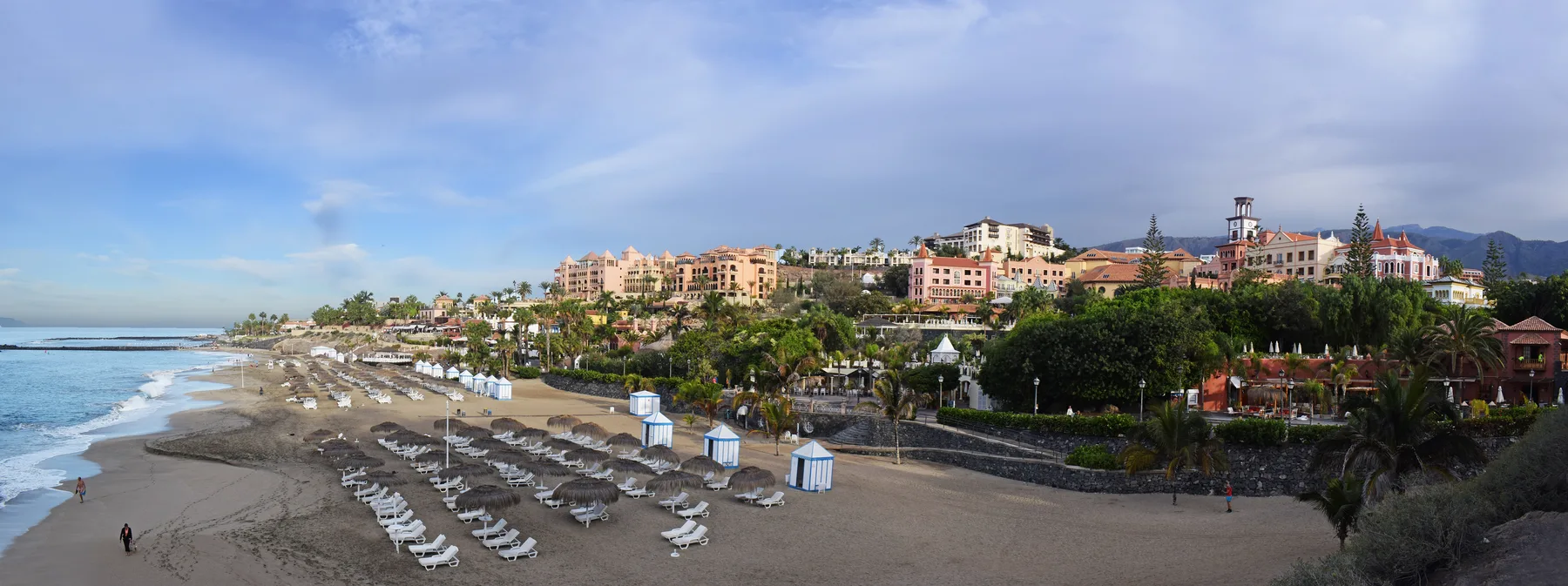
01 · South · Adeje
It is the most expensive hotel hub in the south and the one with the most upmarket hotels. You sleep close to the beaches of Duque, Fañabé and Torviscas, to Siam Park and Aqualand, and to a wide choice of restaurants and shopping centres. It is the most comfortable base for a first visit and for anyone who wants guaranteed sun.
Keep reading: South Tenerife guide · Beaches · Siam Park · Aqualand
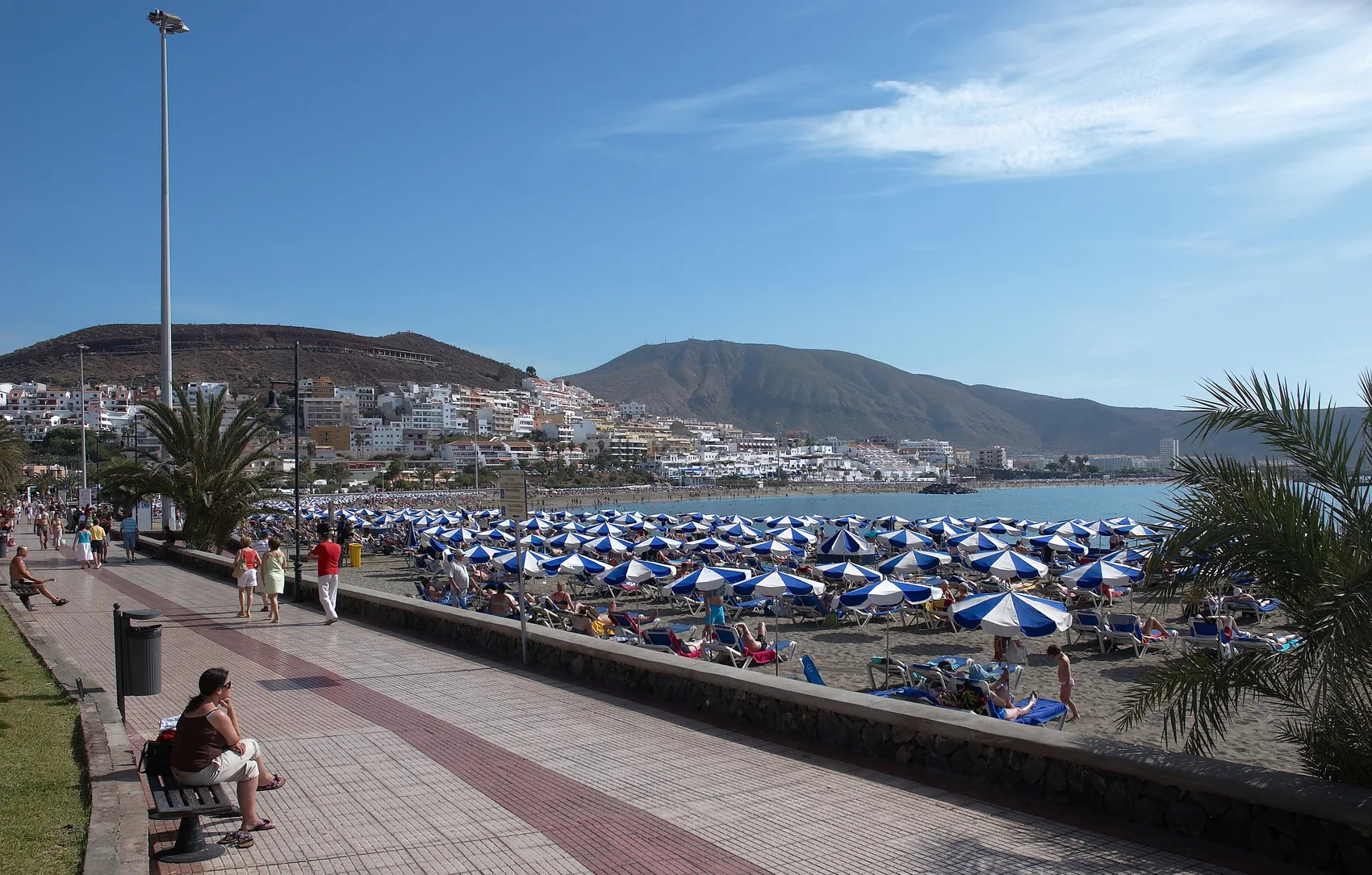
02 · South · Arona
A former fishing village, today an everyday destination: it has a harbour, an urban beach and a flat seafront promenade. Fast ferries leave the harbour for La Gomera (about 50 minutes) and, according to Aena, Titsa line 40 links it with the South airport. It is a practical base and cheaper than Costa Adeje, with the calmest sea on the island at Los Cristianos and Las Vistas.
Keep reading: South Tenerife guide · Beaches · Tours and excursions
03 · South · Arona
It is the most urban part of the south and has the island’s busiest nightlife. Next to Los Cristianos and Costa Adeje, it combines a seafront promenade, shopping centres, bars and entertainment, and it is close to Siam Park. It is cheaper than Costa Adeje and shares its climate and beaches. If you want peace and quiet, Los Cristianos or Costa Adeje are better.
Keep reading: South Tenerife guide · Siam Park · Beaches
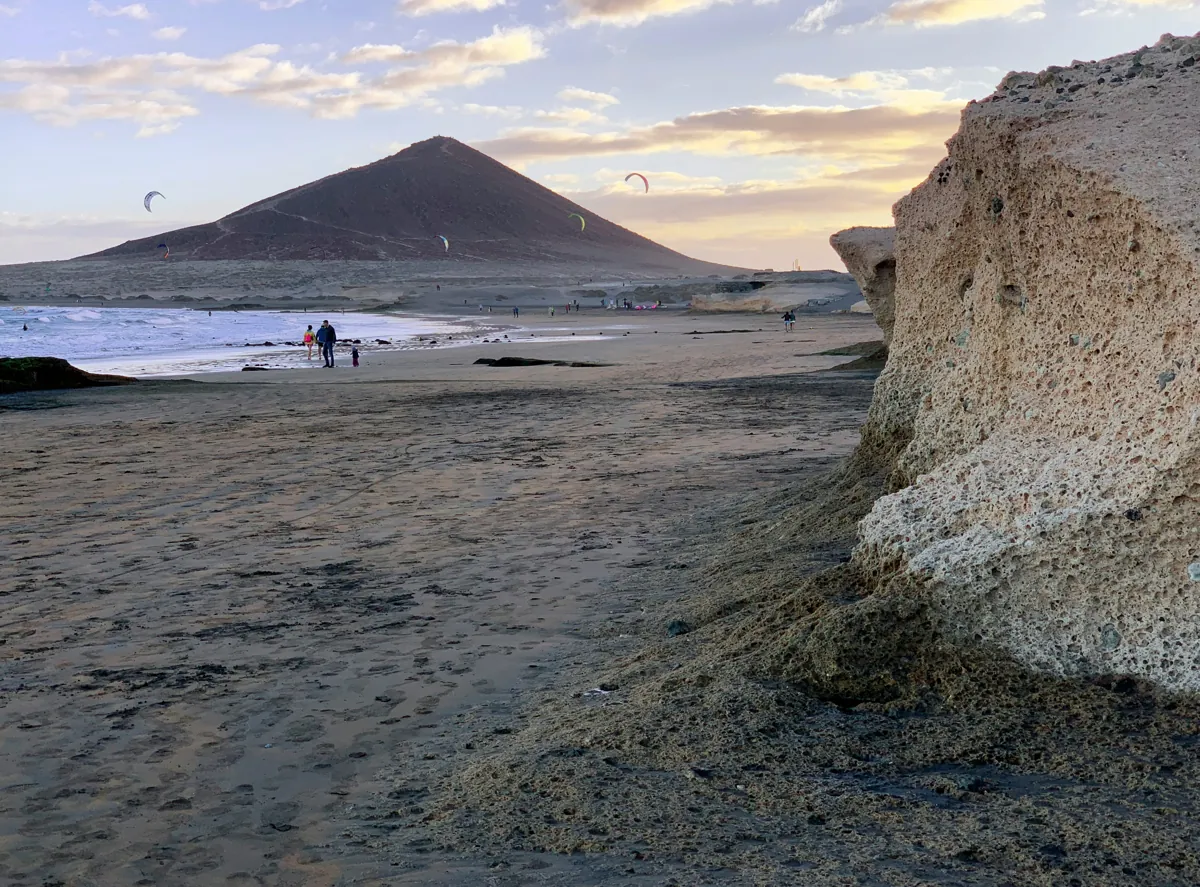
04 · South · Granadilla de Abona
It is Europe’s windsurfing and kitesurfing reference: a long beach, Montaña Roja as a backdrop and terraces with boards leaning against the door. It keeps a village atmosphere and is the part of the south closest to the airport, ideal for the first or last night. But it has its own windy microclimate. More details in the El Médano guide.
Keep reading: El Médano guide · South Tenerife guide · Beaches
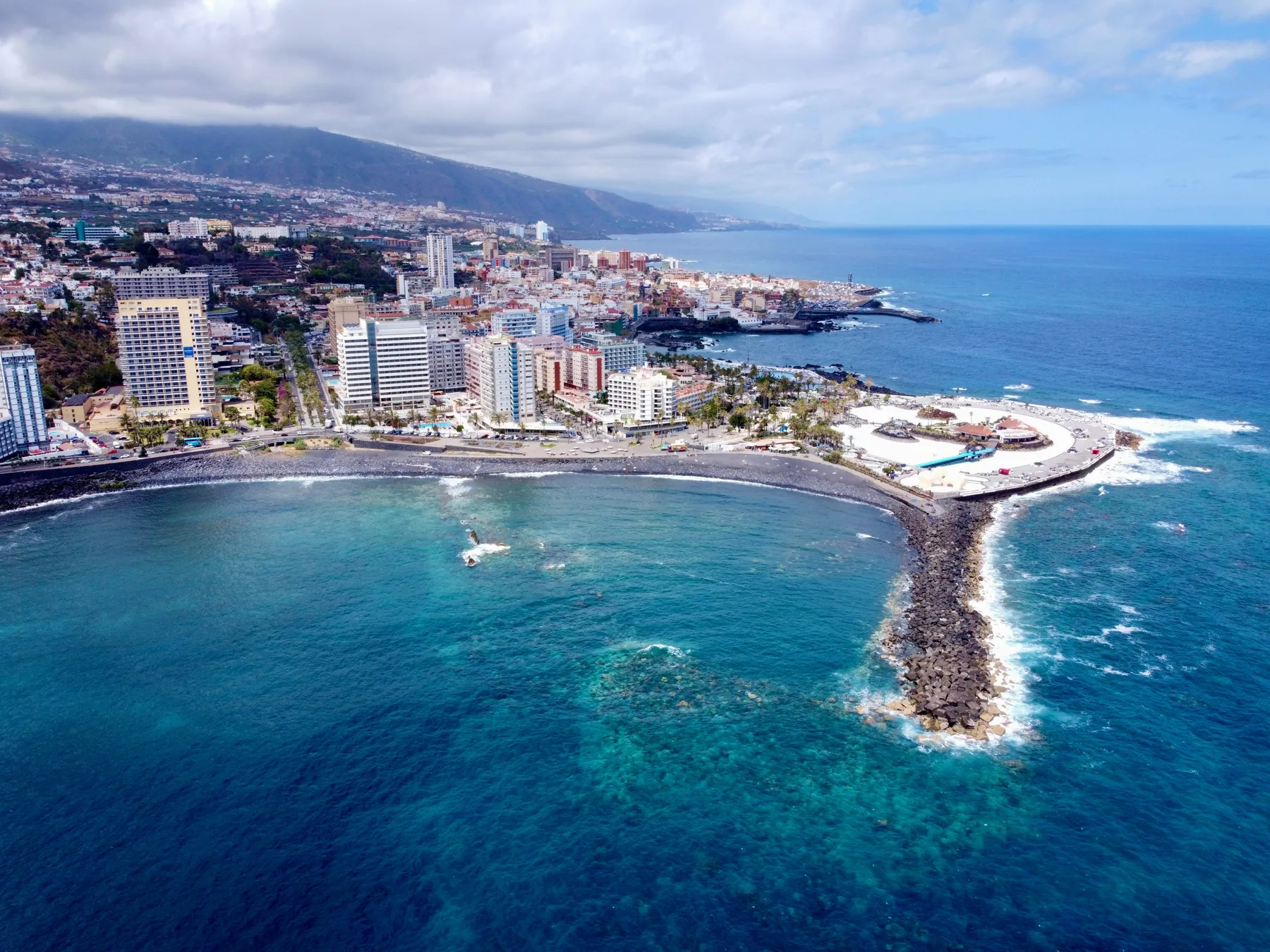
05 · North · Puerto de la Cruz
It was the island’s first tourist destination and it is still a real town: an old quarter, Plaza del Charco, Lago Martiánez and Playa Jardín. With Loro Parque on the outskirts and La Orotava ten minutes away, it is the best base for exploring the north. It has more cloud than the south, so it is not the bet if you want guaranteed sun.
Keep reading: Puerto de la Cruz guide · Lago Martiánez · Loro Parque · North Tenerife guide
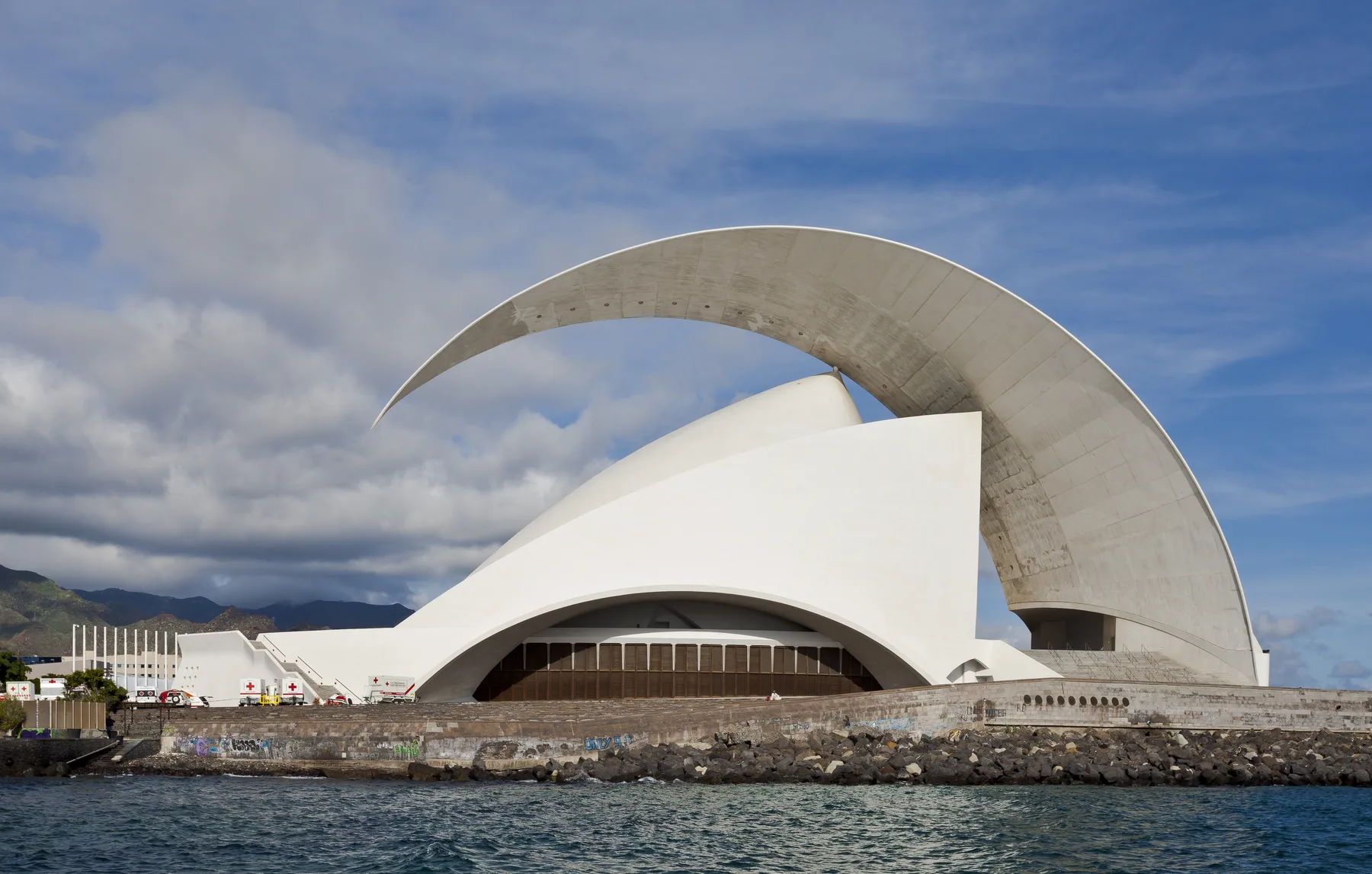
06 · East · Santa Cruz
It is the island’s capital, with Calatrava’s Auditorium, parks, markets and a huge Carnival. It is not a resort or pool destination, but it is the best urban option: a tram to La Laguna, Las Teresitas a quarter of an hour away and Anaga half an hour away. And it is sunnier than its north-eastern position would suggest: 226 mm of rain a year, against 520 mm in La Laguna.
Keep reading: Santa Cruz guide · La Laguna · Anaga · Las Teresitas
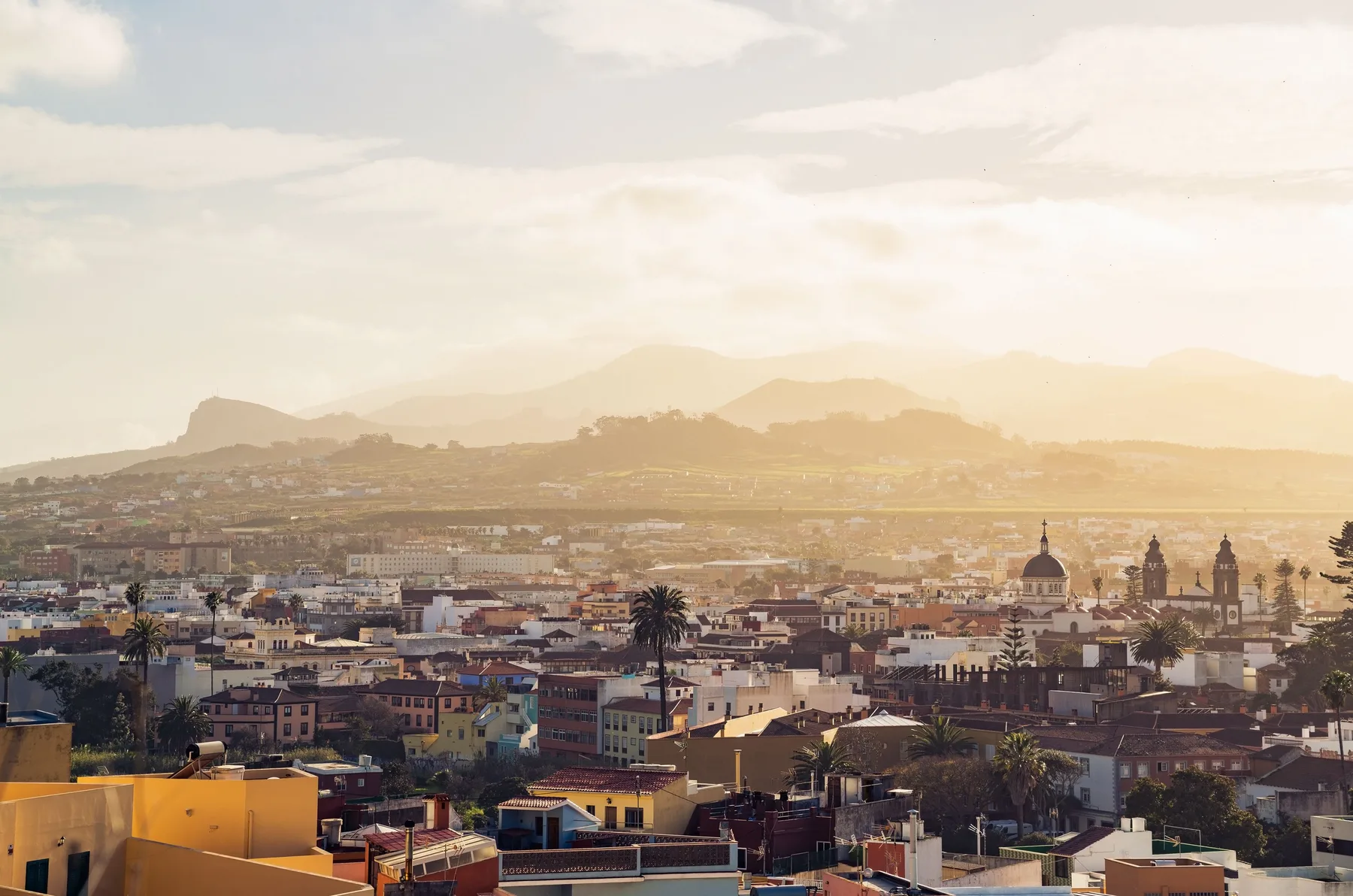
07 · East · La Laguna
A university city declared a World Heritage Site in 1999. You sleep in a mostly pedestrianised old quarter, with terraces full in the afternoons. The tram takes you to Santa Cruz and the Anaga rural park is a quarter of an hour away. It is the coolest area in this guide: do not expect beach weather.
Keep reading: La Laguna guide · Anaga · Santa Cruz
08 · West · Santiago del Teide
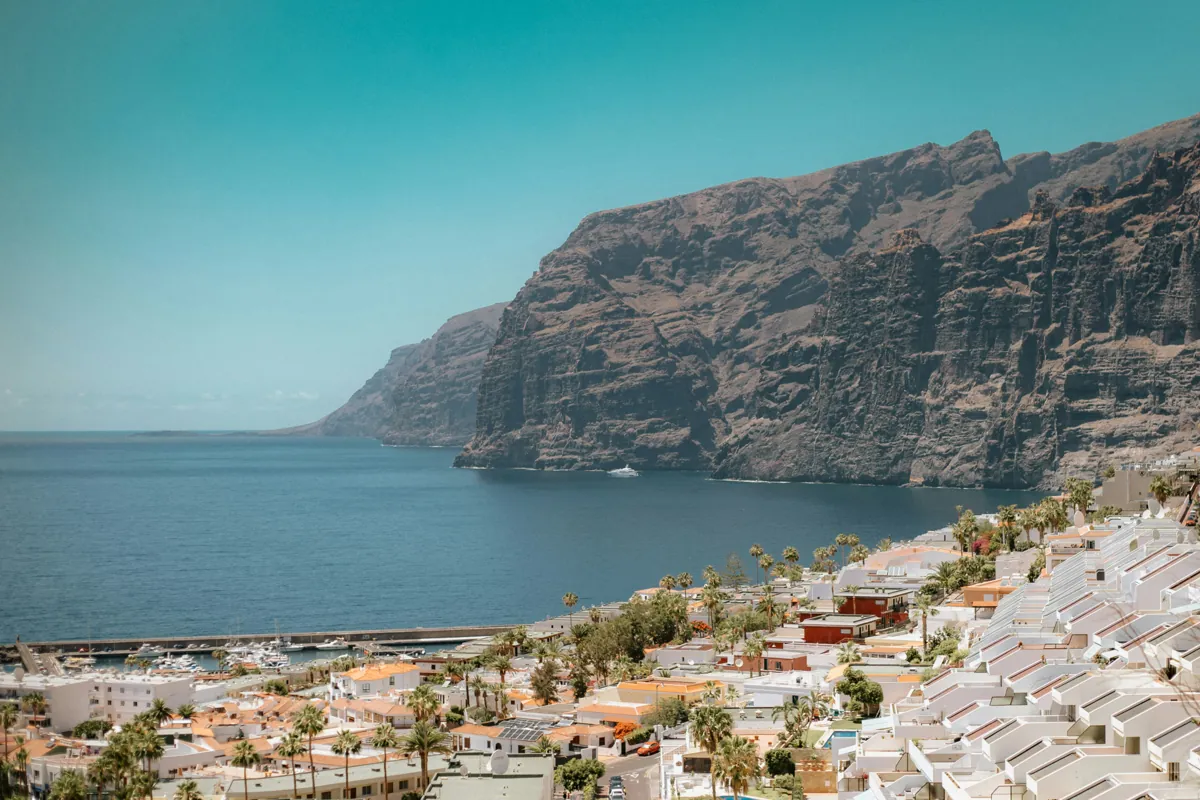
A harbour village at the foot of cliffs up to 600 metres high, according to Tenerife Tourism. It is the quietest base in the south-west: a marina with terraces, boat trips to see pilot whales and dolphins, the small Playa de Los Guíos and La Arena a few minutes away. It has one of the sunniest, driest coasts on the island and is the starting point for Masca.
Keep reading: Los Gigantes guide · Playa de Los Guíos · West Tenerife guide · Masca · Dolphins and whales
North or south
The island has two faces because the trade winds drop their clouds on the north first. That difference decides how much sun, how much rain and what kind of scenery you get. More context in the north guide, the south guide and the west guide.
Puerto de la Cruz, La Laguna, Santa Cruz
Costa Adeje, Los Cristianos, Playa de las Américas, El Médano
| Station | Altitude | Annual mean | January | Annual rainfall | Rain days | Sunshine hours | Clear days |
|---|---|---|---|---|---|---|---|
| South Airport (Granadilla de Abona) | 64 m | 21.4 °C | 18.4 °C | 132 mm | 15 | ≈2,700 | 114 |
| Santa Cruz de Tenerife | 36 m | 21.5 °C | 18.2 °C | 226 mm | 30 | ≈2,900 | 92 |
| North Airport (La Laguna) | 632 m | 16.8 °C | 13.1 °C | 520 mm | 64 | ≈2,400 | 44 |
AEMET climatological normal values, 1981–2010 period; sunshine hours are the sum of the twelve months. The North airport is at 632 m, inside the cloud belt, and records about 78 foggy days a year; the Puerto de la Cruz coast is at sea level and is milder, but we have not found AEMET normals at sea level for the north, so we do not quote them. Links in sources and method.
Without a car
You can travel without a car if you choose your base well. What changes is which excursions you can do from it: the easiest by bus or on foot are in the urban areas.
The old quarter, Lago Martiánez and Playa Jardín are on foot. Titsa buses run to La Orotava and Santa Cruz, and Loro Parque’s free train leaves from the centre. It has more cloud than the south.
Beach, shops and harbour on foot. According to Aena, Titsa line 40 links Los Cristianos and Costa Adeje with the South airport, and the ferries to La Gomera leave from the harbour. The parks have their own transport.
The Metrotenerife tram links the two cities, with trains every few minutes at winter peak times. Las Teresitas has direct buses from the centre of Santa Cruz.
A common solution is to hire a car for just one or two days for the excursions and spend the rest of the trip on foot. If you would rather not drive, see the organised excursions.
With children
With children, three things matter: calm sea, short distances and plans that still work if the day turns cloudy. These are the areas that solve it best.
Calm-water beaches with a flat seafront promenade and services close at hand. Siam Park and Aqualand are a few minutes away. They cost less than Costa Adeje.
It is the option with the most family hotels and apartments, and the beaches of Duque, Fañabé and Torviscas. It is the most expensive of the three southern areas.
Lago Martiánez has children’s pools (under-4s free) and Loro Parque is on the outskirts, with a free train from the centre. It is a good plan even if the day is cloudy.
Las Teresitas, 14–18 min from the centre, has a breakwater that keeps the water calm and shallow. It is the capital’s family beach.
A long, shallow beach beside the village, but windy. El Cabezo, at the northern end, is reserved informally for windsurfing and kitesurfing and is not a place for swimming.
Attractive for the boats and the dolphins, but with steep streets and few beaches. Better with slightly older children.
A useful detail: under the Teide cable car’s rules, children under 3 cannot ride and under-16s must be accompanied. If it is part of the plan, bear it in mind when you divide up your days (see the 3-day family itinerary).
Hiking
The best base depends on the massif. For the Teide the area does not decide it: from almost any base it is less than an hour and a half away.
| Hiking area | Best base | Drive time | Before you go |
|---|---|---|---|
| Anaga (laurel forest and viewpoints) | La Laguna or Santa Cruz | Cruz del Carmen: 14–19 min from La Laguna, 24–31 min from Santa Cruz | Several protected trails require prior authorisation from the Cabildo (the island government). |
| Teide (Las Cañadas) | Any: Puerto de la Cruz, Costa Adeje or Los Gigantes | Cable car: 51–66 min from Puerto de la Cruz, 53–69 min from Costa Adeje, 56–73 min from Los Gigantes | The summit has regulated access and requires a permit; the cable car is booked separately. |
| Masca and Teno | Los Gigantes or Costa Adeje | Masca: 27–34 min from Los Gigantes, 31–40 min from Costa Adeje | The ravine requires a prior booking and has limited places. |
| Montaña Roja (El Médano) | El Médano | Short walk from the village | About 30–40 minutes there and back; best at sunset. |
If you hike for several days and want a single base, Puerto de la Cruz and La Laguna spread the distances best; if you focus on the west, Los Gigantes. Permits and bookings change: confirm them in each guide and on the Cabildo’s official website before you set out.
Whole island
There is no central base on the coast: Tenerife is explored from one or two bases. This table shows how long it takes to reach the essentials from each one.
| Base | Teide cable car | Masca | Cruz del Carmen (Anaga) | Garachico | South airport | North airport |
|---|---|---|---|---|---|---|
| Costa Adeje | 53–69 min | 31–40 min | 68–89 min | 48–63 min | 17–22 min | 60–78 min |
| Puerto de la Cruz | 51–66 min | 53–69 min | 37–49 min | 32–42 min | 69–90 min | 29–38 min |
| La Laguna | 56–72 min | 66–86 min | 14–19 min | 45–59 min | 47–61 min | 6–8 min |
| Santa Cruz | 66–85 min | 75–98 min | 24–31 min | 54–71 min | 46–60 min | 15–19 min |
| Los Gigantes | 56–73 min | 27–34 min | 88–114 min | 44–57 min | 37–48 min | 78–102 min |
Estimate using OpenStreetMap (OSRM): the first number is the time without traffic and the second adds a 30% margin for mountain roads and traffic. It does not include stops.
They spread the distances best: almost everything is between 30 and 90 minutes away. From Costa Adeje, Anaga is 68–89 min away; from Los Gigantes, more than an hour and a half.
It is the most comfortable formula from four days: Puerto de la Cruz (or La Laguna) plus Costa Adeje or Los Gigantes. The guide’s recommended 4-day route uses Puerto de la Cruz and Los Gigantes, changing base on day 3.
Rule of thumb: each change of accommodation costs half a morning in luggage and travel. Do not change more than once or twice, and make the change on the day you will already be passing through the new area. The full routes are in the itineraries by number of days.
By length of stay
The more days you have, the more sense it makes to split your stay. Each figure points to the route on this site that fits best, with four styles: family, sun and beaches, nature and culture.
A short stopover? For two days, see Tenerife in 2 days.
Map of the areas
A schematic map: the circles are offset so they do not overlap and the small dots mark the real location. It includes the Teide and the two airports. It is not for navigation.
Colours: orange = south, green = north, blue = east, purple = west. Island outline © OpenStreetMap contributors (ODbL).
Frequently asked questions
The most searched answers, with AEMET and INE data and our own time estimates, checked on 6 October 2026.
Costa Adeje is the most balanced base for a first visit: sun almost all year, beaches, services and 17–22 min from the South airport. From there you reach Los Gigantes in 25–33 min and the Teide cable car in 53–69 min. If you would rather have a town with character and the green scenery of the north, choose Puerto de la Cruz.
It depends on what you want. The south is drier and sunnier (132 mm of rain a year at the South airport against 520 mm in La Laguna, according to AEMET) and has most of the resorts and parks. The north is greener and more local, but cloudier. With four days or more you can sleep in both: see the north guide and the south guide.
Puerto de la Cruz is the best town option: you can walk around it, and it has buses to La Orotava and Santa Cruz. For a beach holiday without a car, choose Los Cristianos or Playa de las Américas, with a seafront promenade, shops and Titsa line 40 to the South airport. Santa Cruz and La Laguna are linked by tram. The Teide, Masca or Anaga are easier with a car or an organised excursion.
Los Cristianos and Playa de las Américas combine calm seas, flat promenades and the south’s water parks (Siam Park and Aqualand). Puerto de la Cruz has Lago Martiánez and Loro Parque. In Santa Cruz, Las Teresitas has a breakwater that keeps the water calm and shallow.
Among the four tourist points with INE data, the average daily hotel rate was lowest in Puerto de la Cruz (about €95), followed by Santa Cruz (€108), Arona (€136) and Adeje (€186). These are hotel averages between September 2025 and August 2026, not current prices. For El Médano, La Laguna and Los Gigantes there is no equivalent official figure.
Costa Adeje is more expensive and more upmarket; Playa de las Américas is cheaper and has more nightlife. They are 11–14 min apart by car and share the same climate and beaches. For rest and relaxation, Costa Adeje (or Los Cristianos); for going out at night without a car, Playa de las Américas.
No coastal area is clearly better: the cable car is 51–66 min from Puerto de la Cruz, 53–69 min from Costa Adeje and 56–73 min from Los Gigantes. Choose your area for the rest of the trip and set off early. The cable car and the summit permit are arranged separately; everything is in the Teide guide.
For the South airport, El Médano is 10–13 min away; Costa Adeje and Los Cristianos are 16–20 min and 17–22 min. For the North airport, La Laguna is 6–8 min away and Santa Cruz 15–19 min. These are estimated times without traffic or stops.
In the south. In AEMET’s normal values (1981–2010), the South airport records 132 mm a year, Santa Cruz 226 mm and the North airport, in La Laguna at 632 m, 520 mm. According to our west guide, the Los Gigantes coast is also among the driest and sunniest.
From four days it usually pays off: you sleep a few nights in the north and others in the south or west, and save yourself long drives. With three days or fewer, stick to one base. Each change of accommodation costs half a morning, so do not change more than once or twice. The itineraries by number of days say which base each plan uses.
With 3 days, a single base: Costa Adeje or Los Cristianos for sun and beaches, Puerto de la Cruz for nature and culture. With 4 or 5 days, two bases (north and south or west). With a week, two bases or, at most, three. The details are in the section by length of stay.
No. We cannot check prices or availability, so we would rather you choose the area first. This guide has no affiliate links and no sponsored accommodation. If we add specific accommodation in future, we will explain the selection criteria and clearly mark any affiliate links.
Transparency and sources
Checked on 6 October 2026. We would rather tell you what we know and what we do not than pretend to be precise.
The travel times, the atmosphere ratings and any recommendation are our own estimates. Access conditions for the Teide, Anaga and Masca change: confirm them in the relevant guides and on the official websites.
Next step
Once your base is decided, the next thing is to divide up your days. Choose the length of your trip or look at each area in more detail.
Photo of Playa de Las Vistas: Tuxyso, Wikimedia Commons (CC BY-SA 4.0) · Photo of Playa del Duque: Mark Wordy, Wikimedia Commons (CC BY 2.0) · Photo of Los Cristianos: Wouter Hagens, Wikimedia Commons (CC BY-SA 3.0) · Photo of the Tenerife Auditorium: Diego Delso, delso.photo (CC BY-SA 3.0) · Map: outline © OpenStreetMap contributors (ODbL)