ES Explore guides
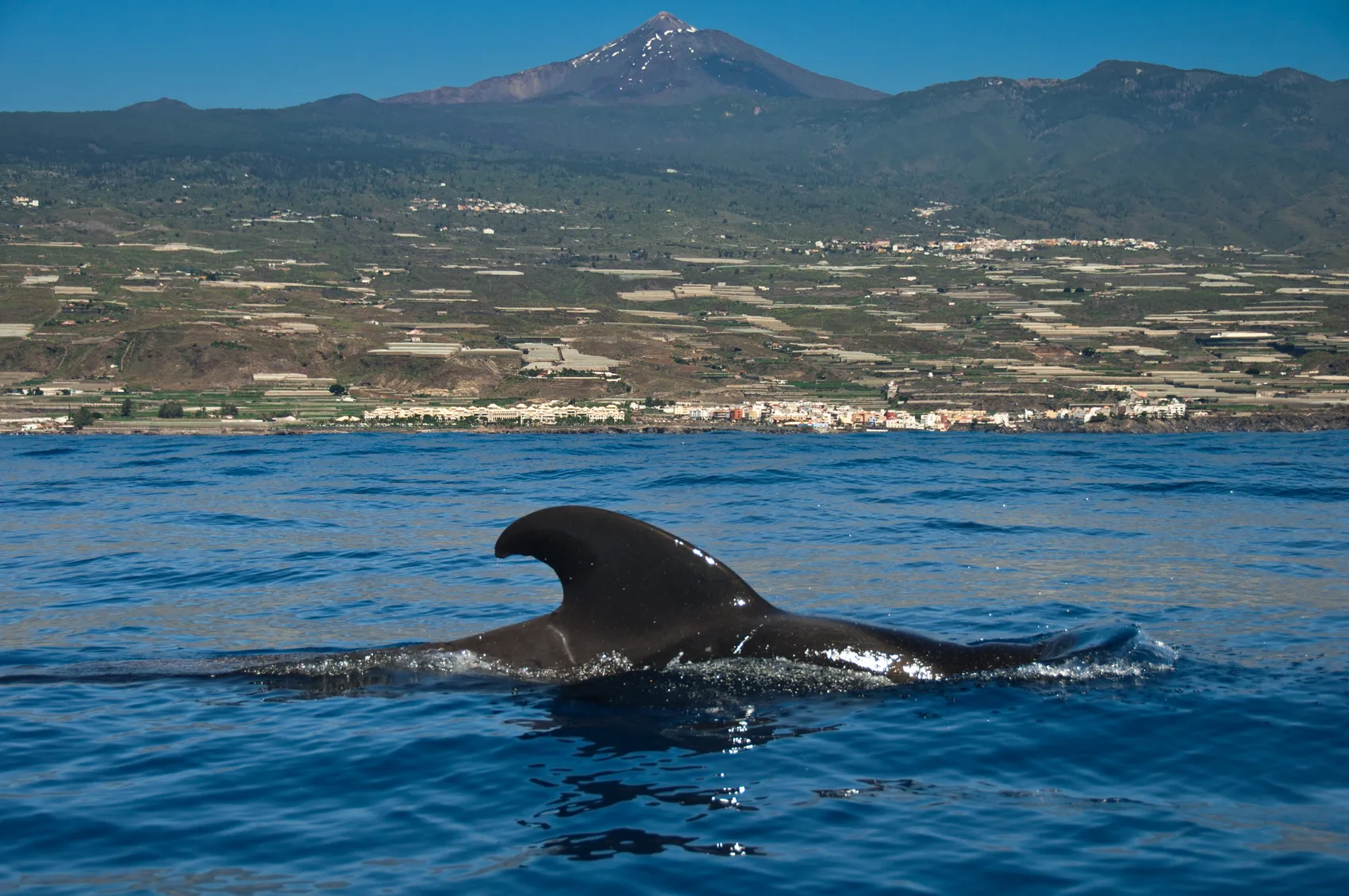
Pilot whale surfacing off the coast of Tenerife with Teide in the background

Marine life guide · Whale and dolphin watching

Dolphins and whales in Tenerife, all year round

Between Tenerife and La Gomera lives one of the most stable pilot whale populations on the planet — resident, not passing through. There's no need to wait for a particular season: the channel has cetaceans 365 days a year.

400+Resident pilot whales in the channel
46 kmWidth of the Tenerife–La Gomera channel
2–3 hUsual length of an excursion
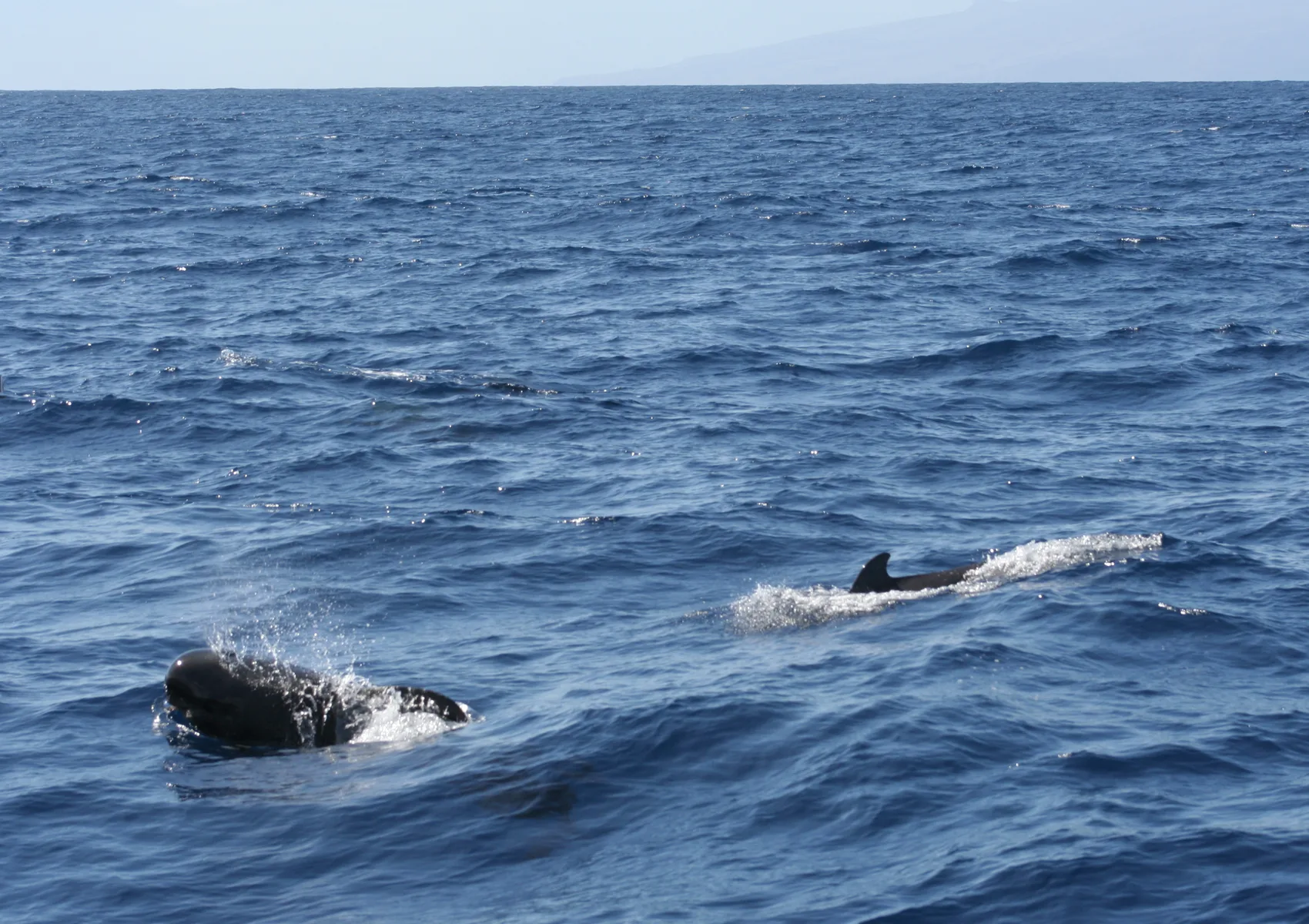
Two pilot whales swimming together in the channel between Tenerife and La Gomera

One of only 4 places in the world

A population that doesn't migrate

The short-finned pilot whale (Globicephala macrorhynchus) normally travels long distances following its prey — except here. The stretch of sea between Tenerife and La Gomera is home to more than 400 resident individuals all year round, something found in only three other places on the planet: Hawaii, California and Japan.

Add to that bottlenose and common dolphins, also regularly present — which makes this stretch one of the most reliable whale-watching areas in Europe.

What's in the channel

Three things worth knowing.

Where they live, where trips leave from to see them and which other species appear.

01Pilot whale off the southwest coast of Tenerife

The pilot whale strip

Sightings usually happen a mile from the coast, although many trips sail up to three miles out to sea. The depth and calm of this channel between the two islands are the reason the population has never left.

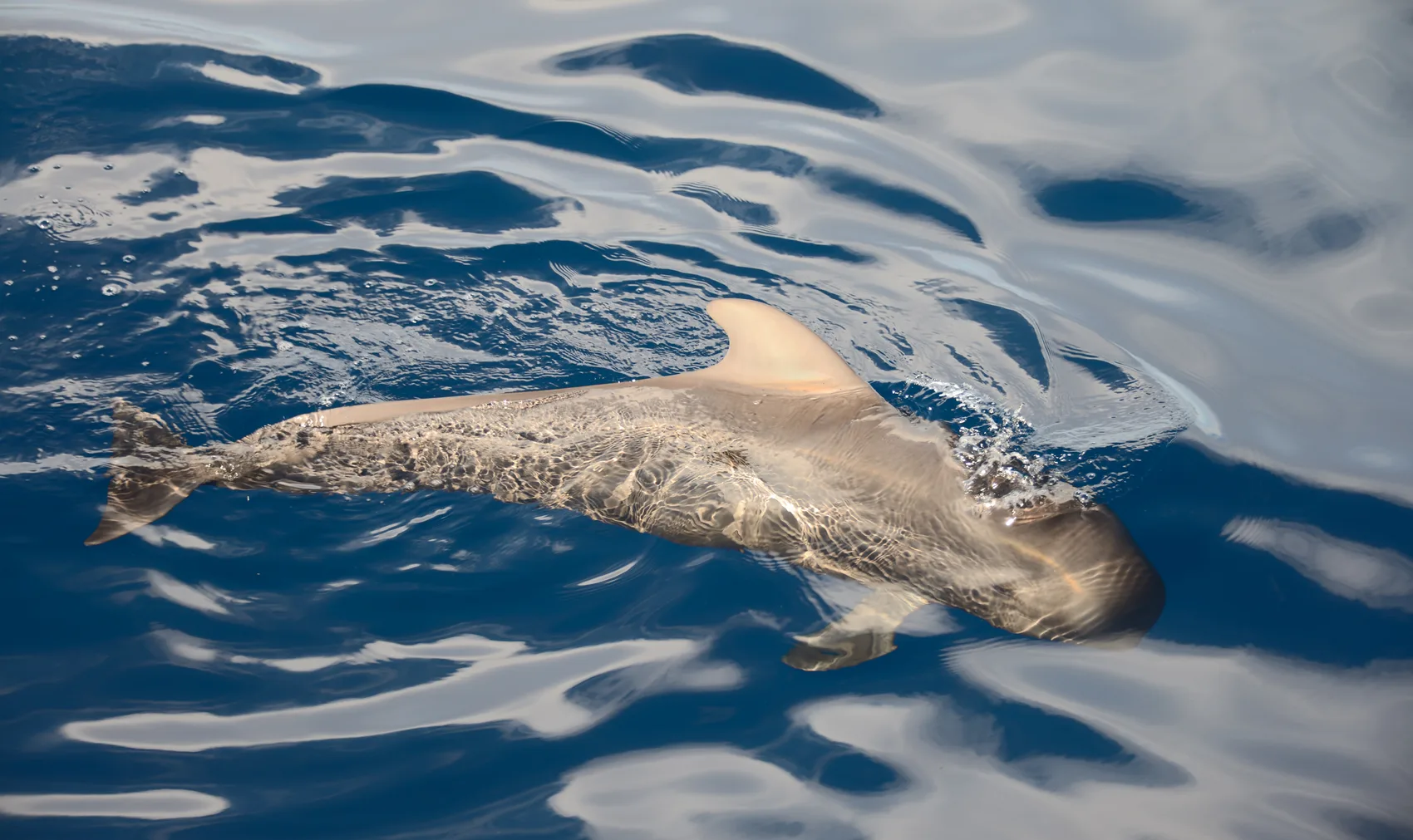
02Dorsal fin of a pilot whale surfacing

Puerto Colón and Los Gigantes

Most trips leave from Puerto Colón, in Costa Adeje, or directly from Los Gigantes — the closest point to the strip where the pilot whales live. Las Galletas is a third, somewhat less common option.

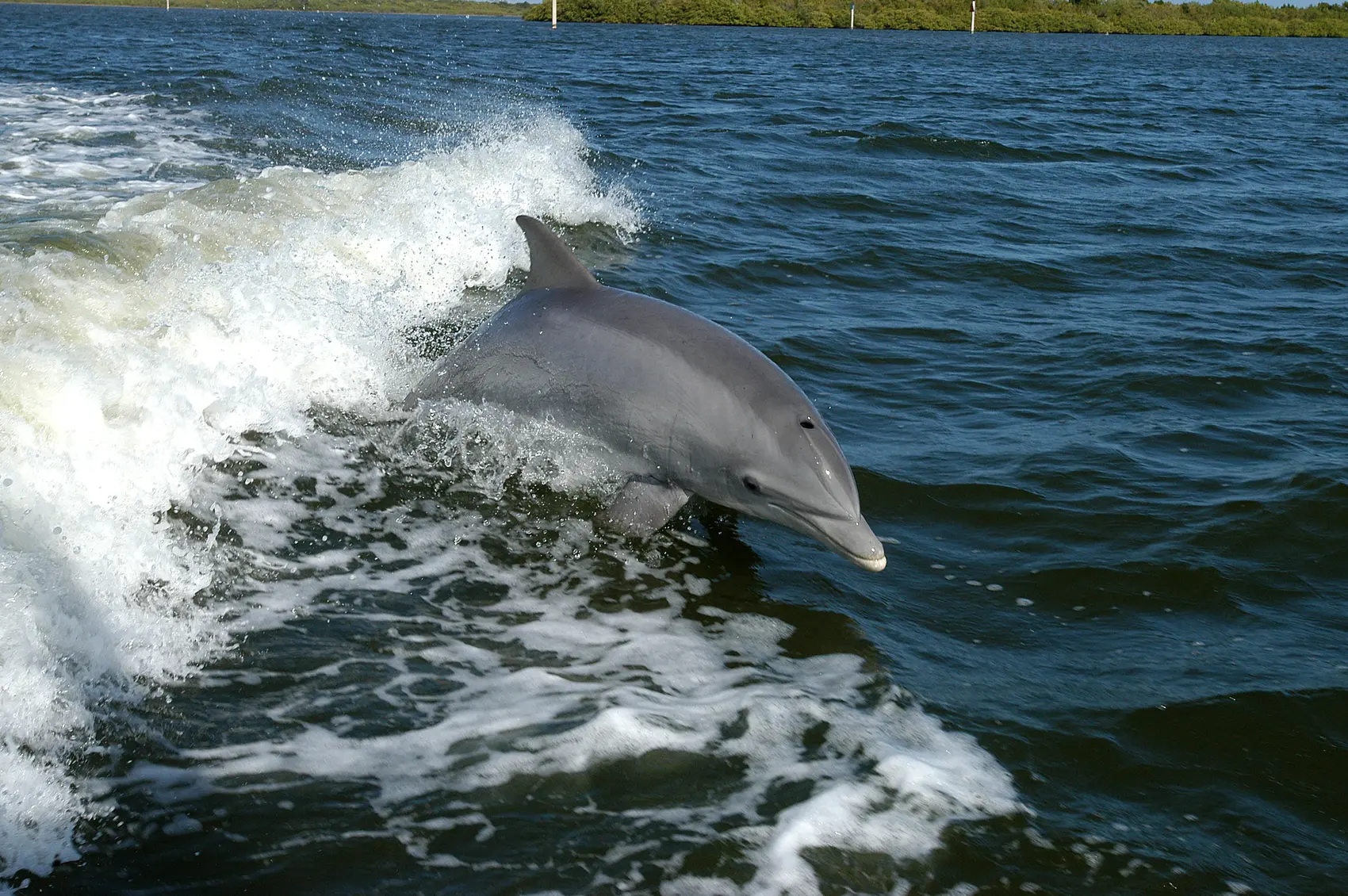
03Bottlenose dolphin swimming next to a boat's bow

Dolphins

Alongside the pilot whales you find bottlenose and common dolphins, and more occasionally striped dolphins. It is common to see them playing at the bow or in the wake of the boat, taking advantage of its momentum.

Bear in mind

Whale watching in the Canary Islands is regulated by Decree 178/2000. Authorised boats carry the Blue Boat Flag — the guarantee that they respect the legal distance and behaviour around the animals. Avoid booking with operators that don't display it.

How to organise it

Choosing the right boat matters.

The difference between a good sighting and a disappointing one is usually the operator, not luck.

01 · BOAT TRIP

2–3 hours from Puerto Colón

Most trips last between 2 and 3 hours and include the sighting area plus some swimming time. You can book on the same day in low season.

  • Departures several times a day
  • Flexible booking outside high season
  • Usually includes a swimming stop
02 · RESPONSIBLE WATCHING

Choose a boat with the Blue Boat Flag

A certified operator doesn't get too close, doesn't chase the animals and limits the time spent with each group. It is the option that guarantees a sighting without stressing the wildlife.

  • Distance and time regulated
  • Swimming with them is not allowed
  • Better long-term experience for the population
03 · COMBINE WITH LOS GIGANTES

One day, two plans

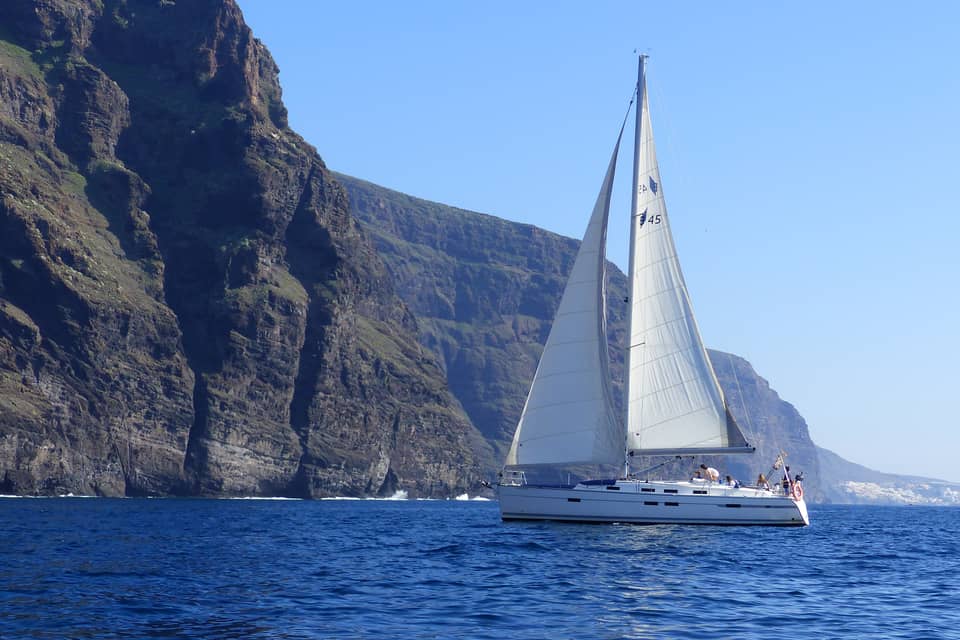
Many trips leave from Los Gigantes harbour itself, which lets you combine the whale watching with a visit to the cliffs on the same day.

  • Departures from Los Gigantes
  • Saves a transfer
  • A good option if you're coming from the west of the island

Book online

Four pre-selected trips.

All comply with the responsible-watching regulations — compare and book the one that fits best.

These links are affiliate links: if you book through them, we earn a small commission at no extra cost to you. We only include operators with verified ratings and a good reputation.

Practical information

Everything worth knowing before booking.

Ports, duration and what to expect on board.

REGULATIONS

Decree 178/2000

Regulates cetacean watching in the Canary Islands. Always look for the Blue Boat Flag on the vessel.

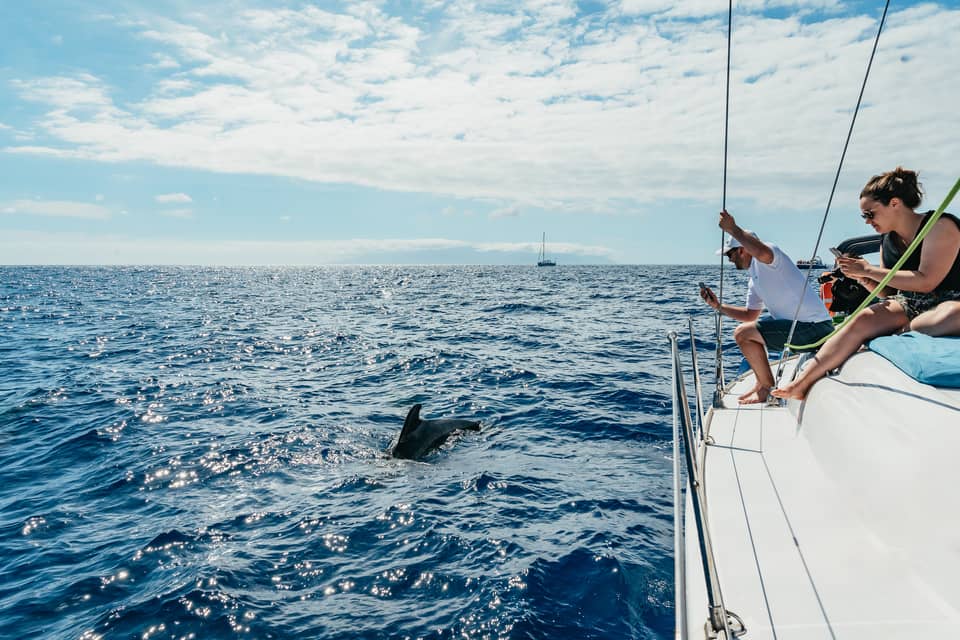
Pilot whale surfacing next to a whale-watching boat
DEPARTURE PORTS

Puerto Colón and Los Gigantes

The two most common starting points; Las Galletas is a less frequent third option.

DURATION

2–3 hours

Enough to reach the sighting area, observe and, in many cases, swim.

SEASON

All year

As it is a resident population, there is no pilot whale season — they are present all 365 days.

Dolphin jumping next to a boat
OTHER SPECIES

Occasional visitors

More sporadically, sperm whales, fin whales and other passing species are seen.

WITH CHILDREN

Suitable for families

Most boats are set up to carry children; it is best to book in advance in high season.

WHAT TO BRING

Sunscreen and something warm

Sunglasses, sunscreen and a light layer — it is windier on deck than it seems from land.

SEASICKNESS

Take precautions if you need to

If you're prone to it, a seasickness tablet taken well before departure makes all the difference.

Before you board

Common mistakes to avoid.

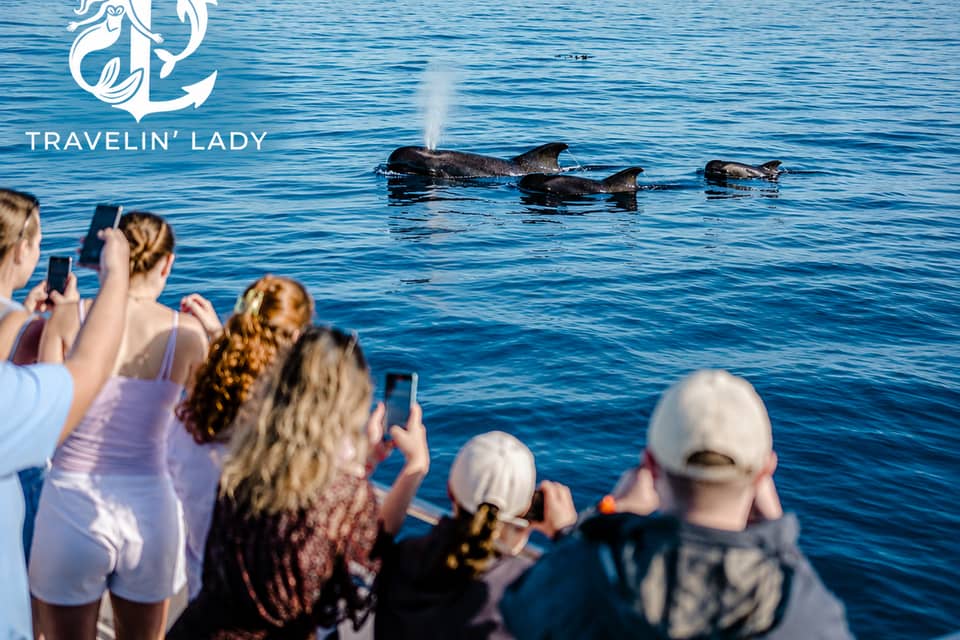
Pilot whales swimming in the channel between Tenerife and La Gomera
  • Choose a boat with the Blue Boat Flag — it guarantees respect for the legal distance.
  • Don't ask the skipper to get closer: they decide the distance.
  • Book first thing; the sea is usually calmer in the morning.
  • Bring a warm layer — it is windy on deck even when it is hot on land.
  • If you're prone to seasickness, take the tablet well before setting out.
  • It's not a zoo: there are days with less activity — this is wild fauna.

Frequently asked questions

The essentials before booking a whale-watching trip.

Are there whales and dolphins in Tenerife all year round?

Yes. Short-finned pilot whales are a resident population in the Tenerife–La Gomera channel, present 365 days a year, not just in one particular season.

What's the difference between a pilot whale and a whale?

The short-finned pilot whale (or “pilot whale”) is actually a large member of the dolphin family, not a true whale — which is why in Tenerife people talk interchangeably about “cetacean watching” to cover both groups.

Where do the whale-watching boats leave from?

Mainly from Puerto Colón, in Costa Adeje, and from Los Gigantes. Las Galletas also has departures, less frequently.

Is whale watching in Tenerife ethical?

With a certified operator carrying the Blue Boat Flag, yes: the regulations limit the distance and the time spent with each group and prohibit chasing or swimming with the animals.

How long does the excursion last?

Between 2 and 3 hours with most operators, including transit, sighting and often a swimming stop.

Do you see real whales or only dolphins?

Most commonly you see short-finned pilot whales and bottlenose or common dolphins. Other whales — sperm whales, fin whales — appear occasionally, with no guarantee.

Pilot whales swimming together in Tenerife's waters

Next stop

More marine life, this time without leaving the water.

El Puertito de Adeje is home to a population of sea turtles that you reach by swimming from the shore — another way to see wildlife in the wild, with no need for a boat.

Cover photo: Gustavo A. Pérez, Wikimedia Commons (CC BY-SA 4.0) · Photo of the channel: Tony Hisgett, Wikimedia Commons (CC BY 2.0) · Photo of the fin: Cayambe, Wikimedia Commons (CC BY-SA 3.0) · Photo of the dolphin: NASA, Wikimedia Commons (Public domain)