
06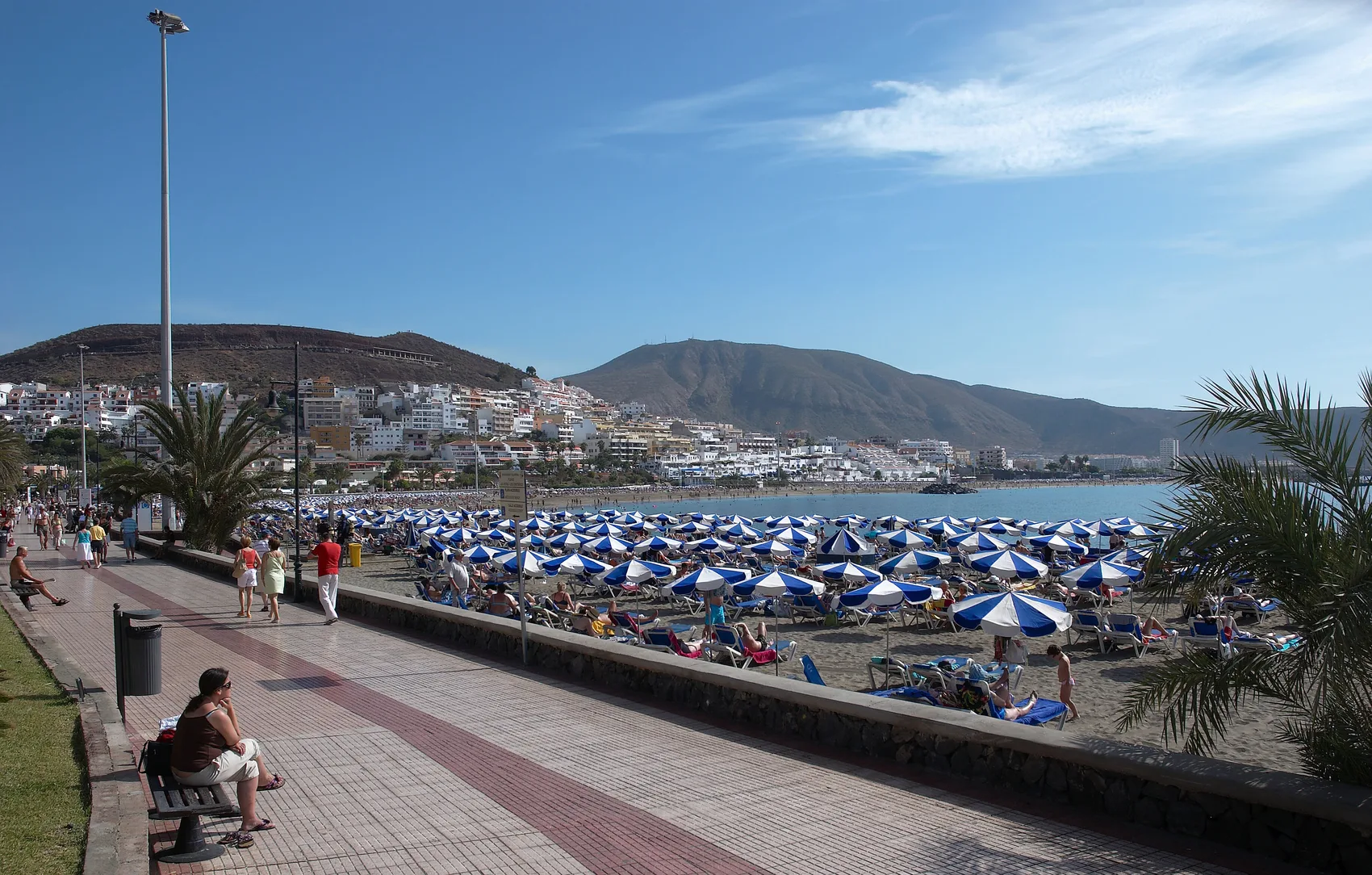
Los Cristianos
A former fishing village turned into the south's family beach: golden sand, calm water and a promenade with restaurants.
Golden sand · South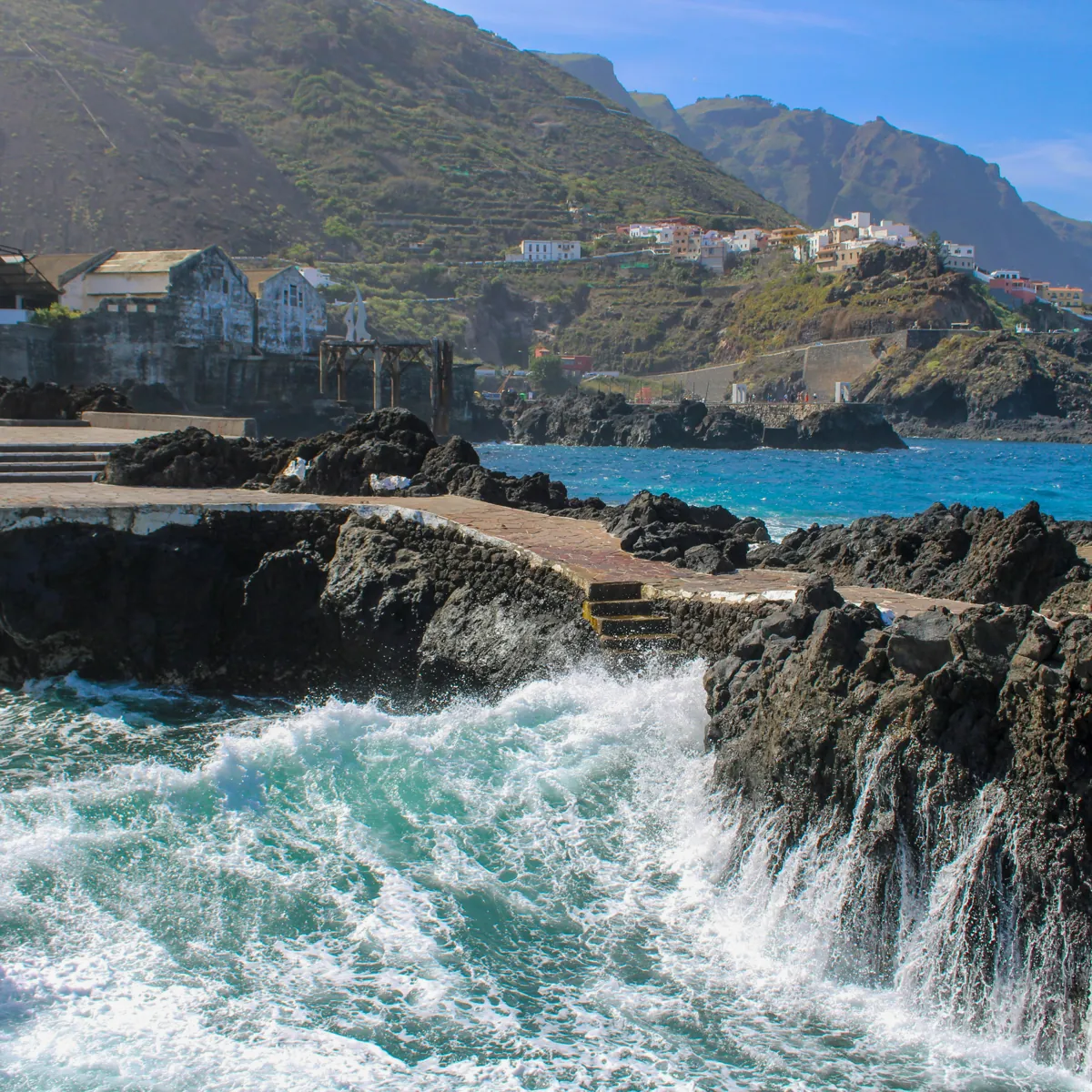
Beaches of Tenerife
Black volcanic sand in the north, golden sand brought from the desert in the south, and a coastline with a beach for every kind of trip. Twelve beaches that sum up the island's variety.
Before you choose a towel
The north has black volcanic sand, waves with more character and fewer crowds. The south has guaranteed sun, imported golden-sand beaches and the island's tourist infrastructure. Neither option is better than the other — it depends on what you're after.
These twelve beaches sum up that variety, from the wildest to the best equipped.
The 5 must-sees
North and south, black and golden sand, city beach and cliff beach.
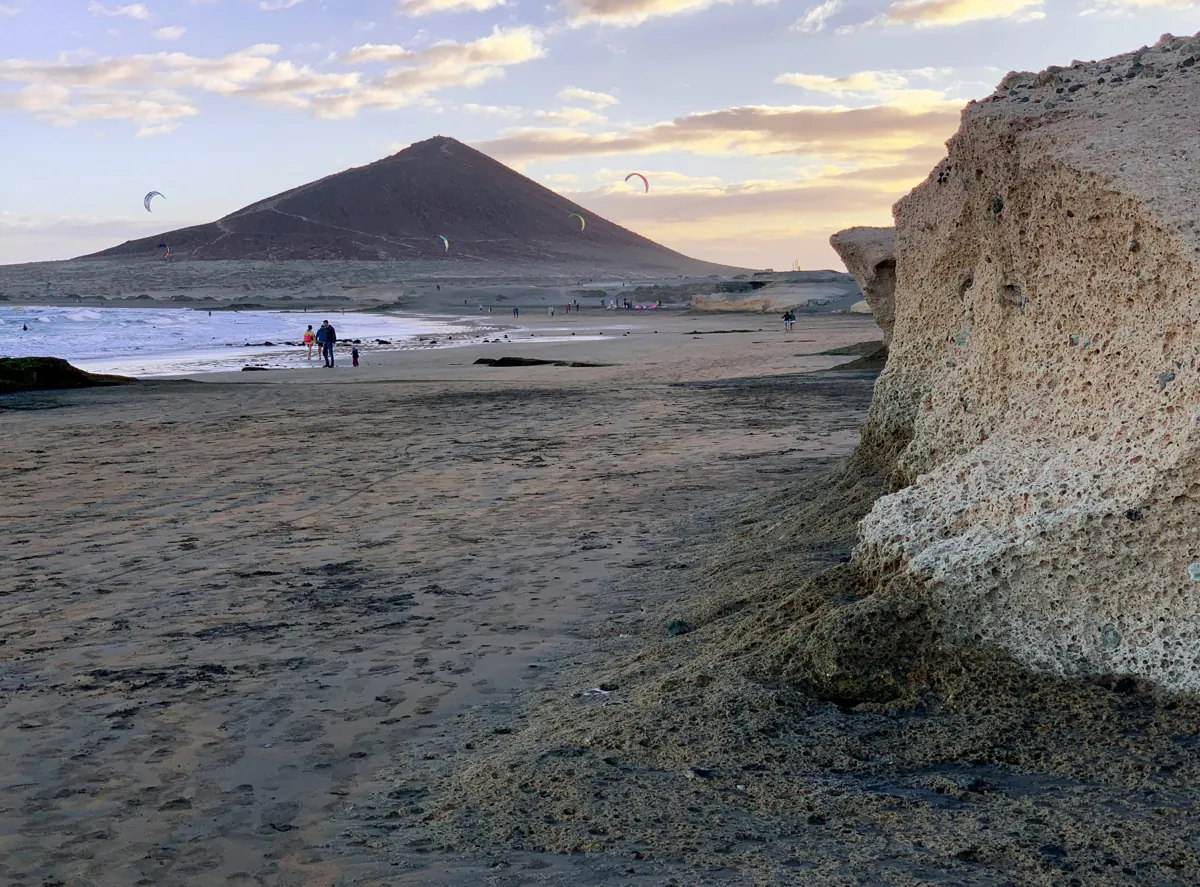
A long, open beach with Montaña Roja in the background, Europe's windsurf and kitesurf mecca. Golden sand, a relaxed atmosphere and less crowded than the rest of the south.
Golden sand · South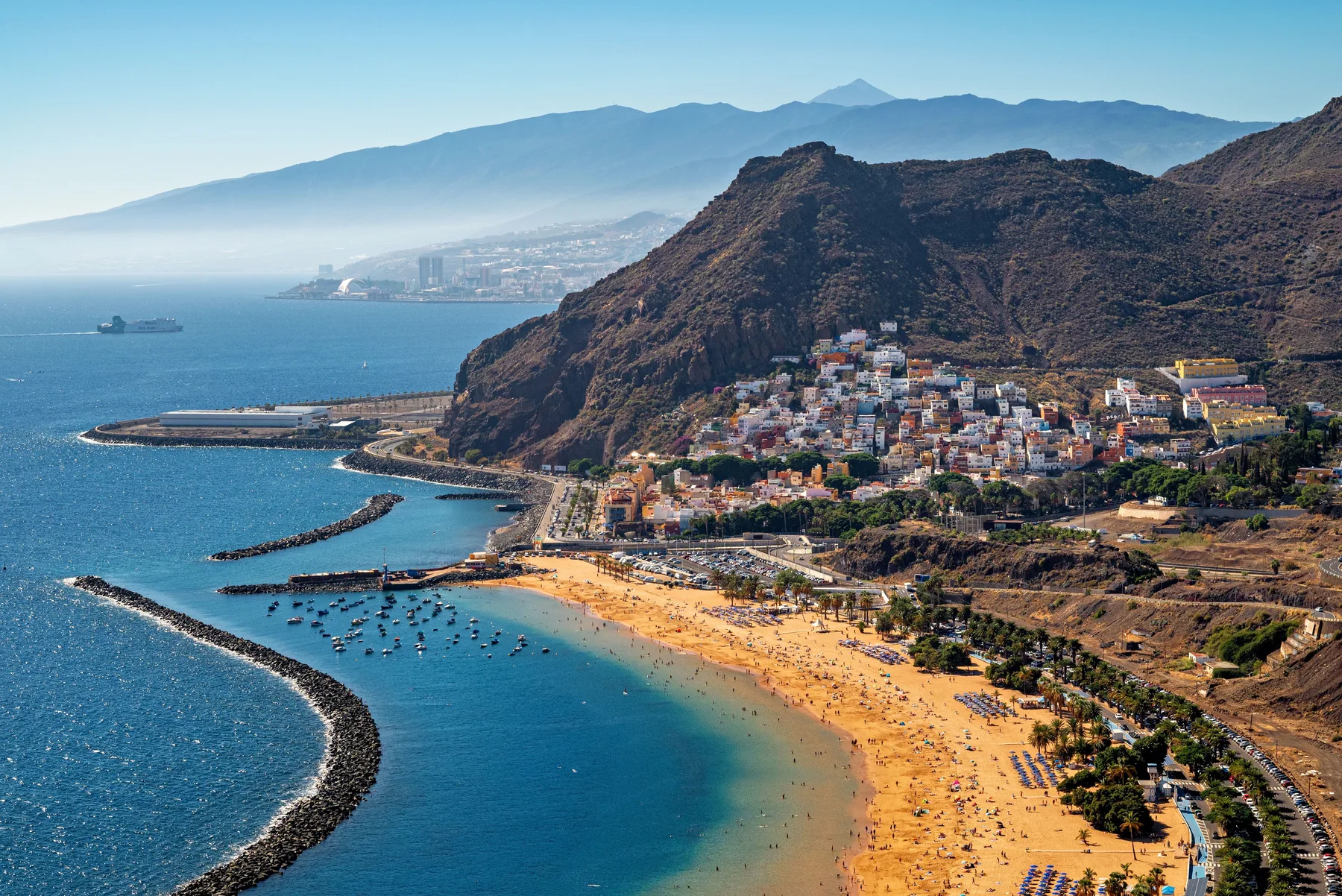
Golden sand brought from the Sahara over a volcanic backdrop, with the Anaga massif behind. The benchmark beach for anyone staying in Santa Cruz or La Laguna.
Golden sand · Northeast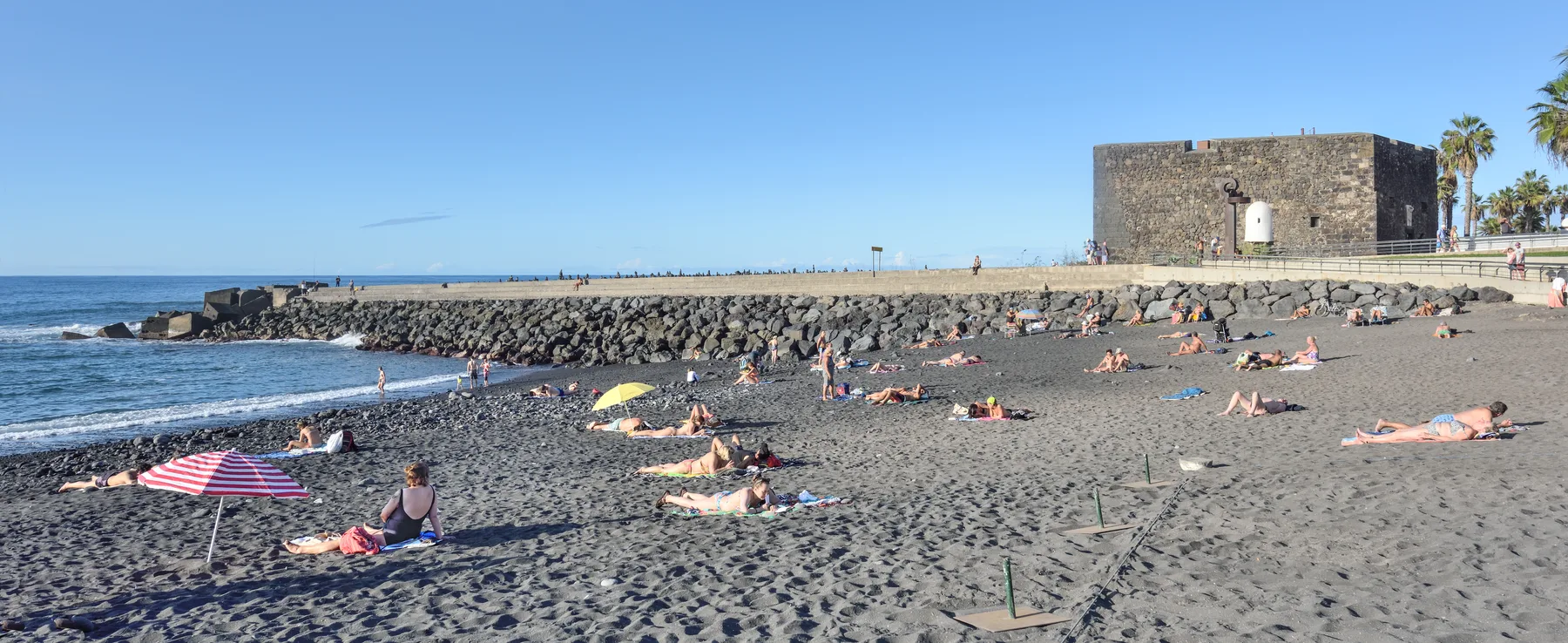
Urban black-sand beach designed by César Manrique, with subtropical gardens, the Castillo de San Felipe and views of a clear Teide. The most comfortable beach in the north.
Puerto de la Cruz
Black sand · North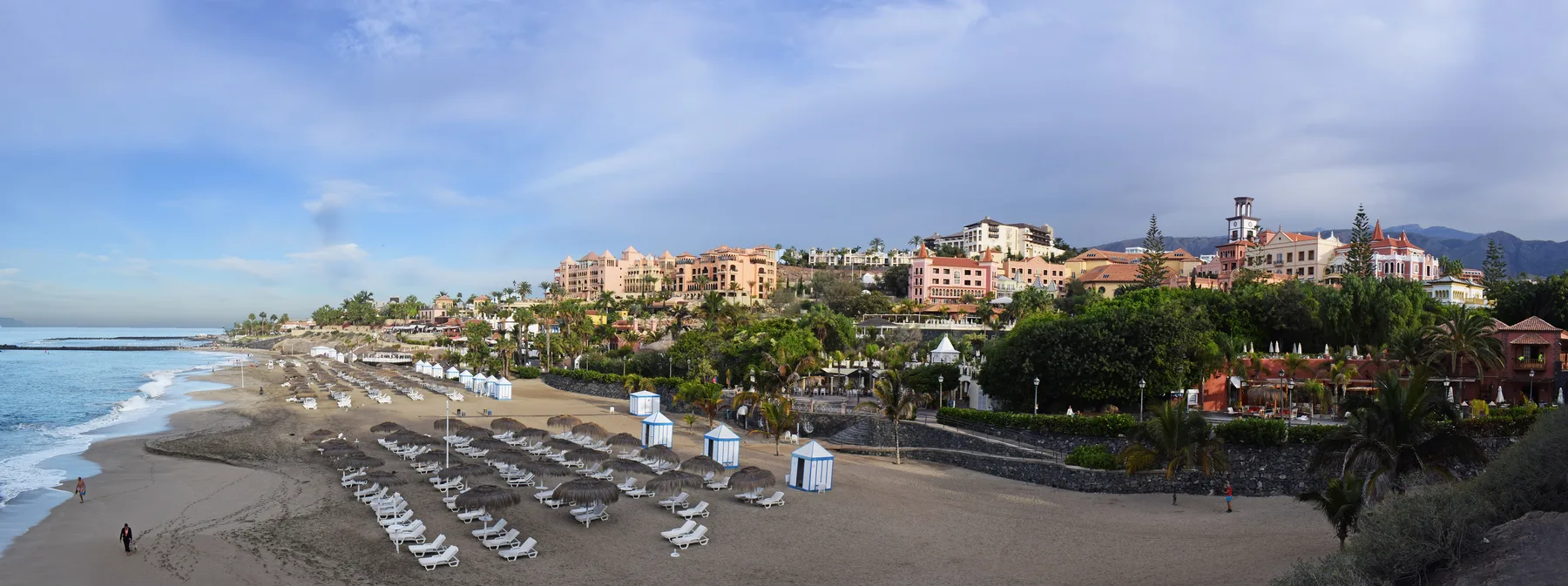
The most elegant beach in the south: fine sand, calm water and the promenade with the most five-star hotels on the island. Ideal for a day of sun loungers and service.
Costa Adeje
Golden sand · South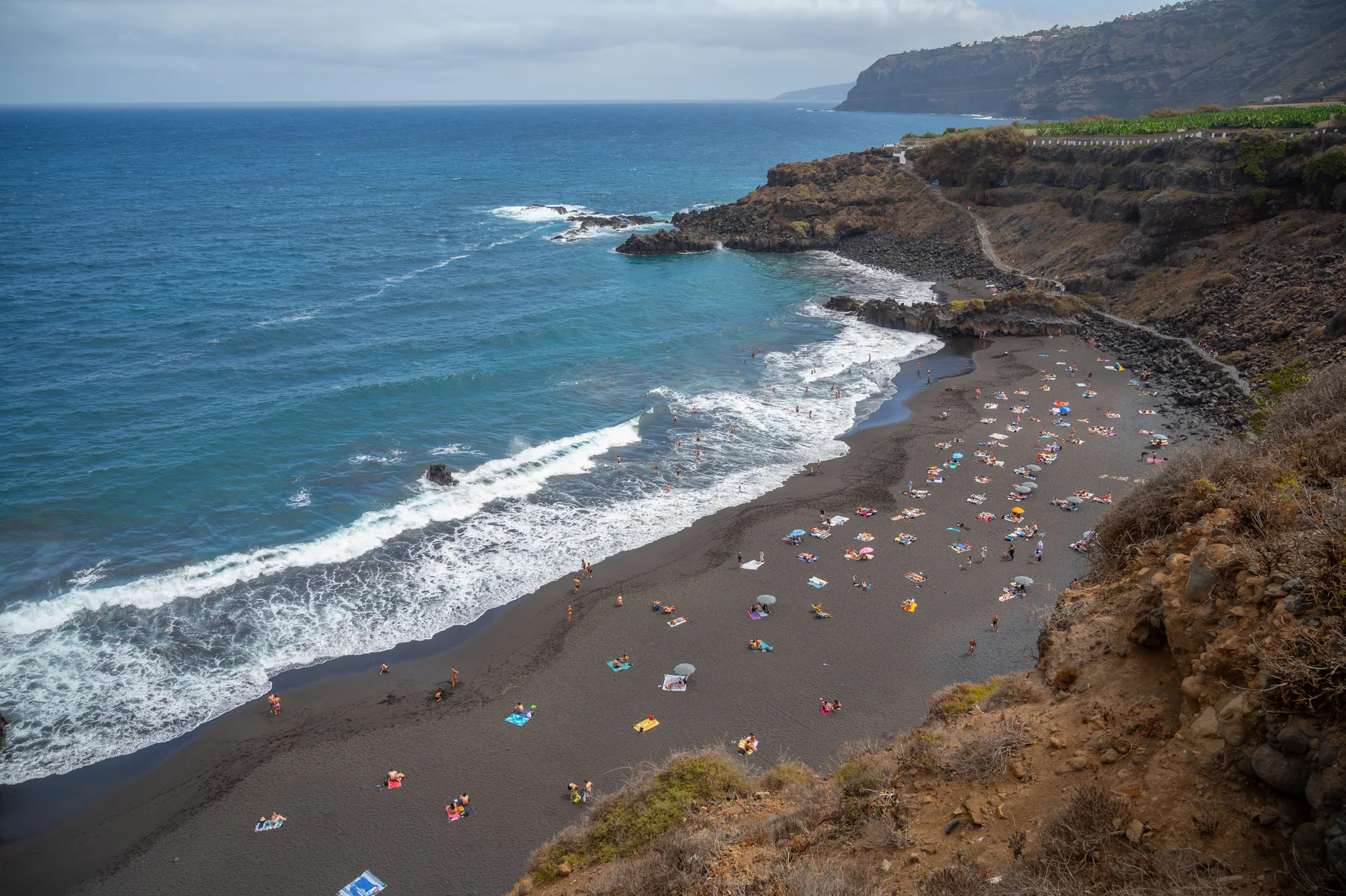
The wildest of the five: black sand at the foot of a cliff, reached on foot from a car park and undeveloped. Strong surf, better for lying on the sand than for swimming without care.
La Orotava
Black sand · NorthSeven more
A former fishing village turned into the south's family beach: golden sand, calm water and a promenade with restaurants.
Golden sand · South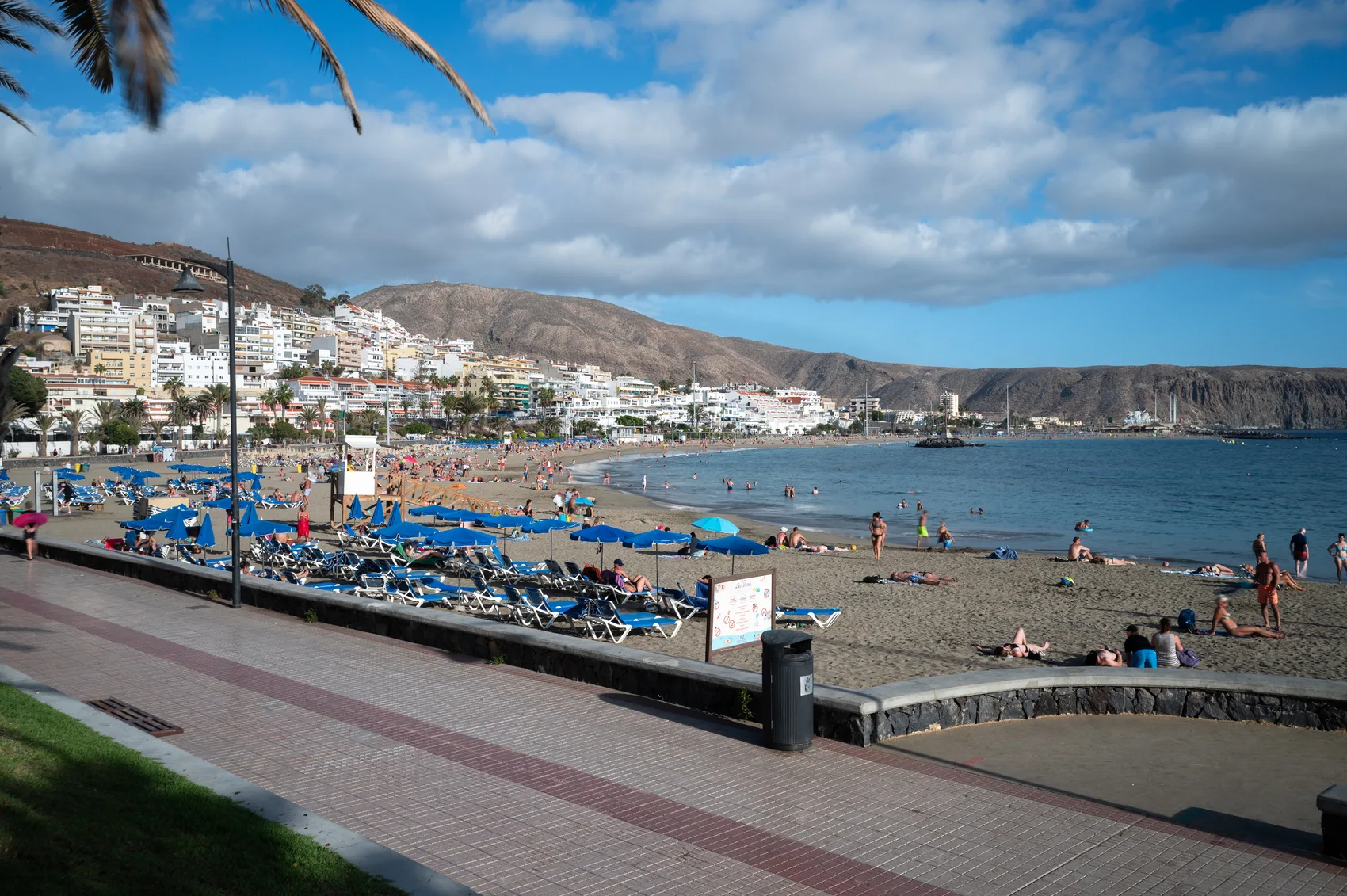
A Blue Flag city beach, among the most awarded on the island: fine sand, adapted access and all services close at hand.
Golden sand · South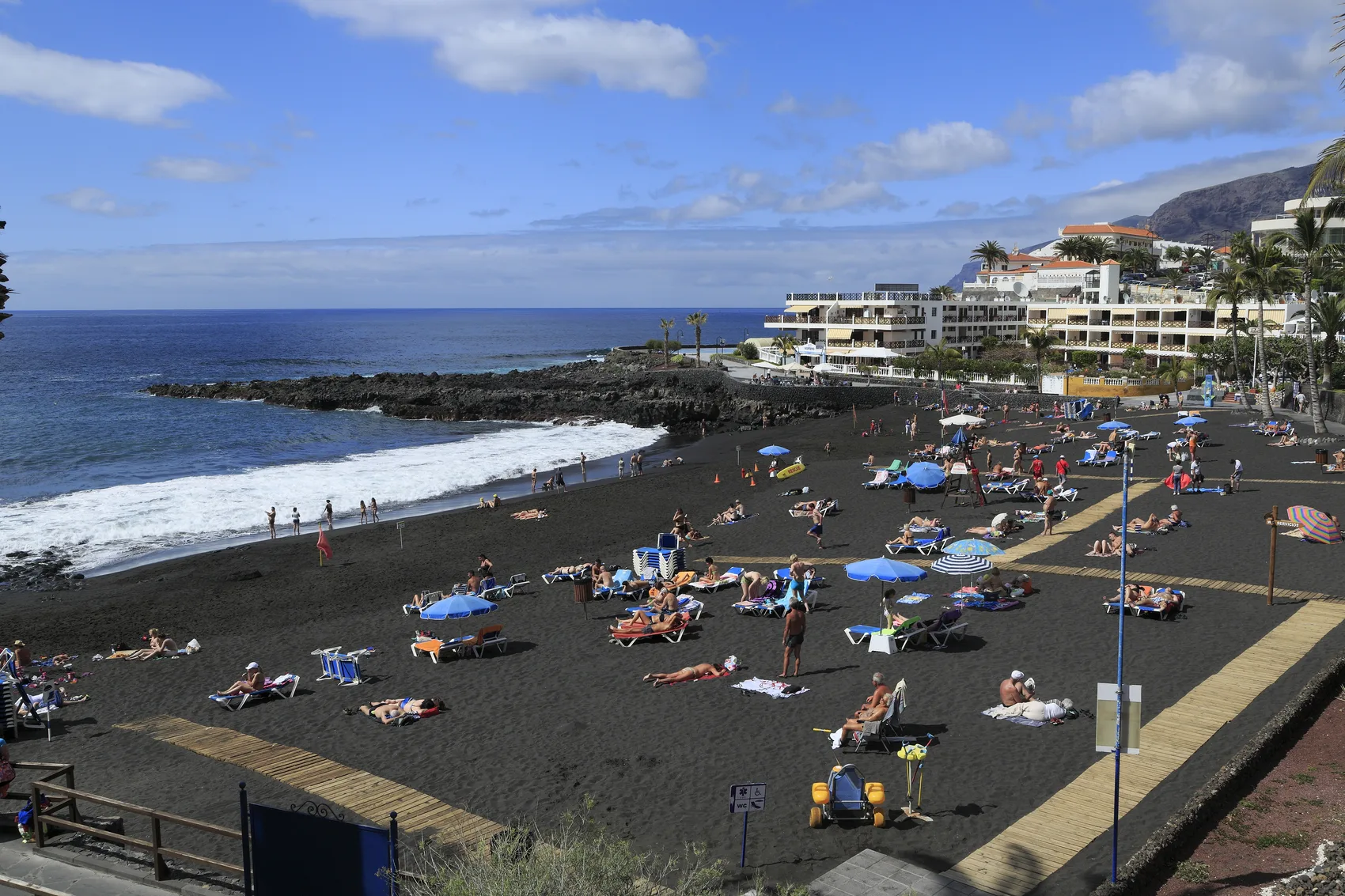
Black volcanic sand next to Los Gigantes, with a quiet promenade and fewer tourists than the rest of the south.
Black sand · West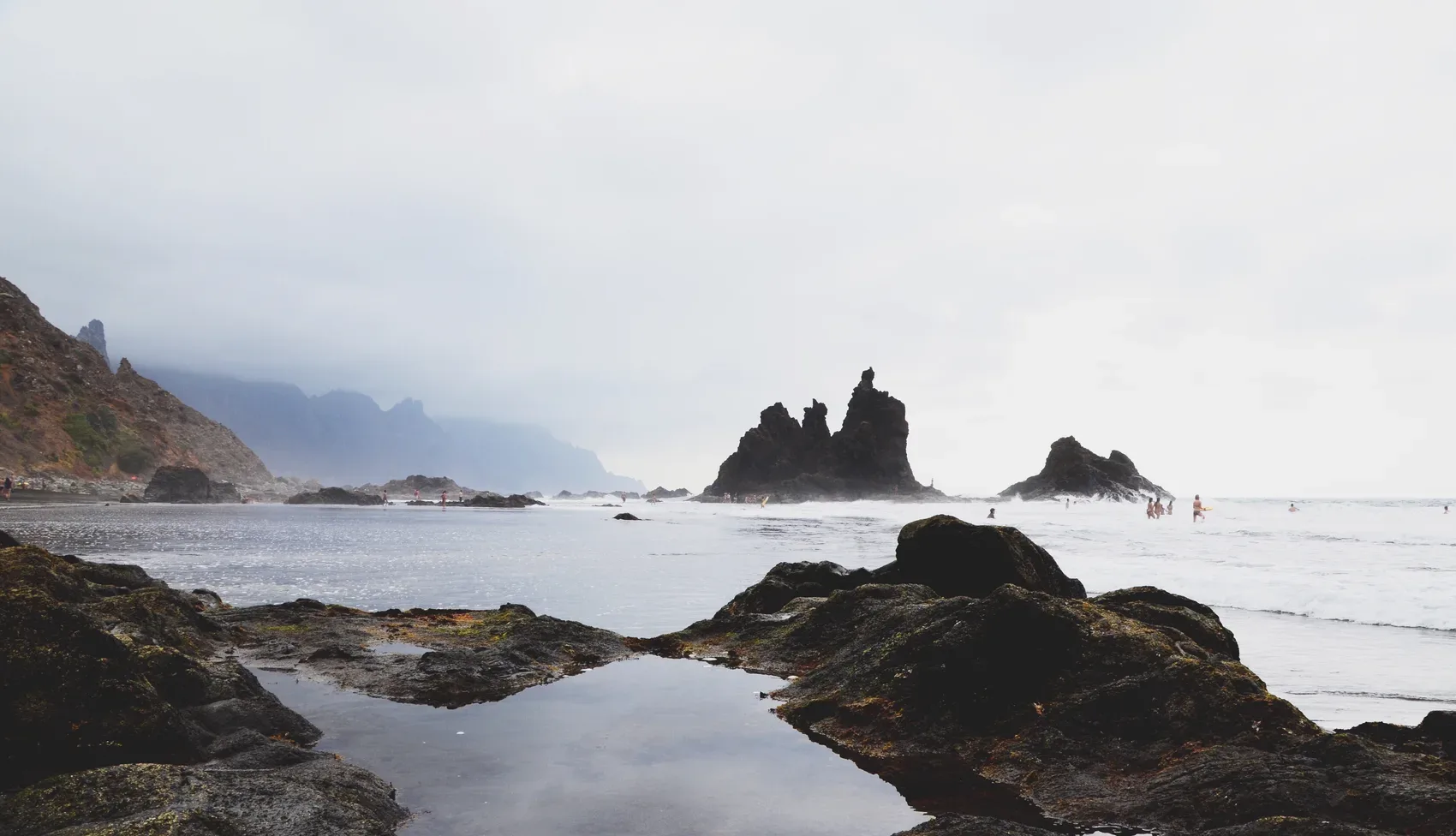
Anaga's wildest postcard: black sand, rock stacks in the sea and laurel-covered cliffs. Strong surf, better for photos than for swimming.
Black sand · NortheastReachable only by boat or on a demanding hike from Igueste — the most unspoilt and least photographed beach on the island, barely developed.
Black sand · Northeast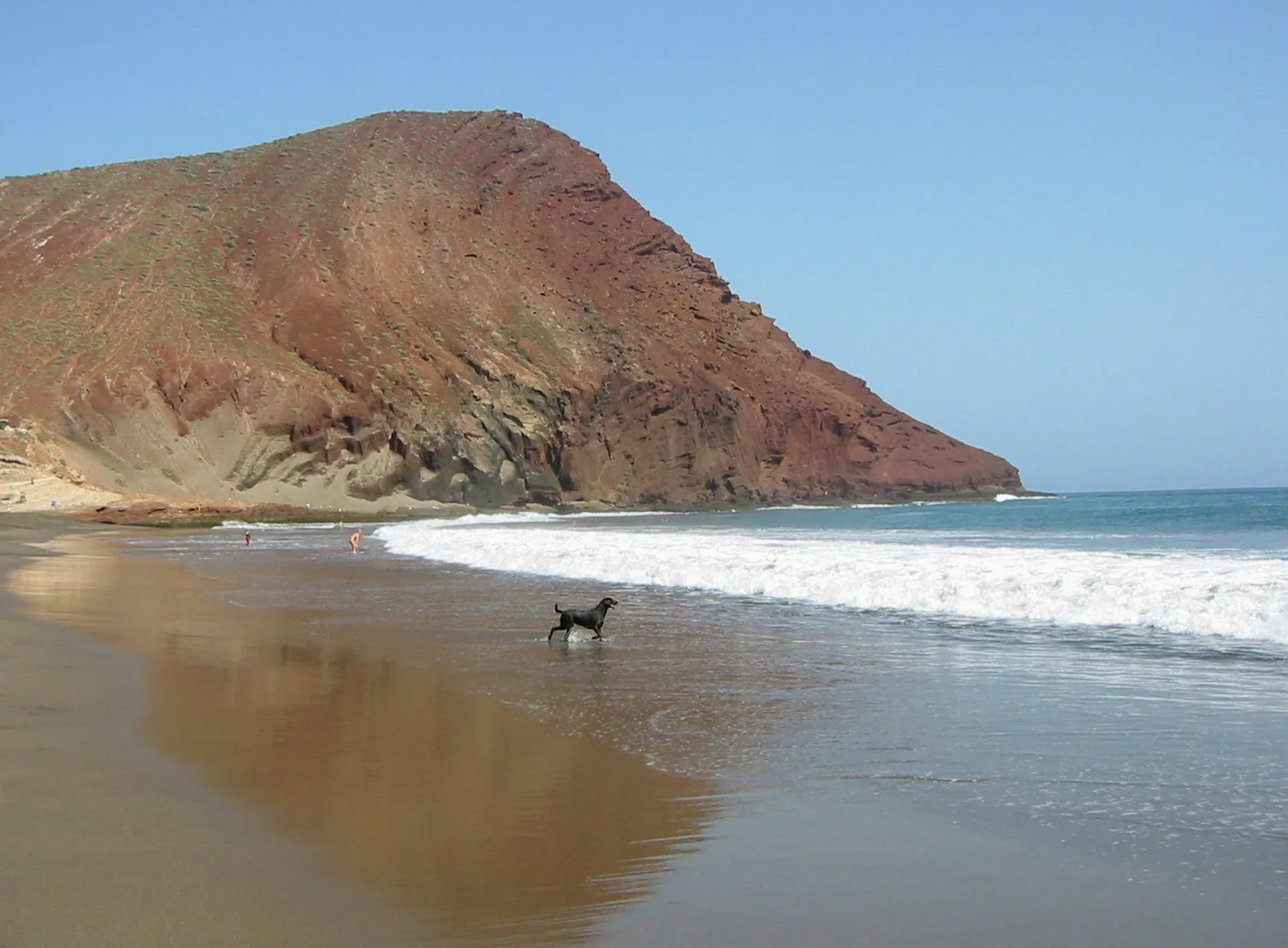
Golden sand and kilometres of almost undeveloped beach facing Montaña Roja, with a naturist area at its southern end.
Golden sand · South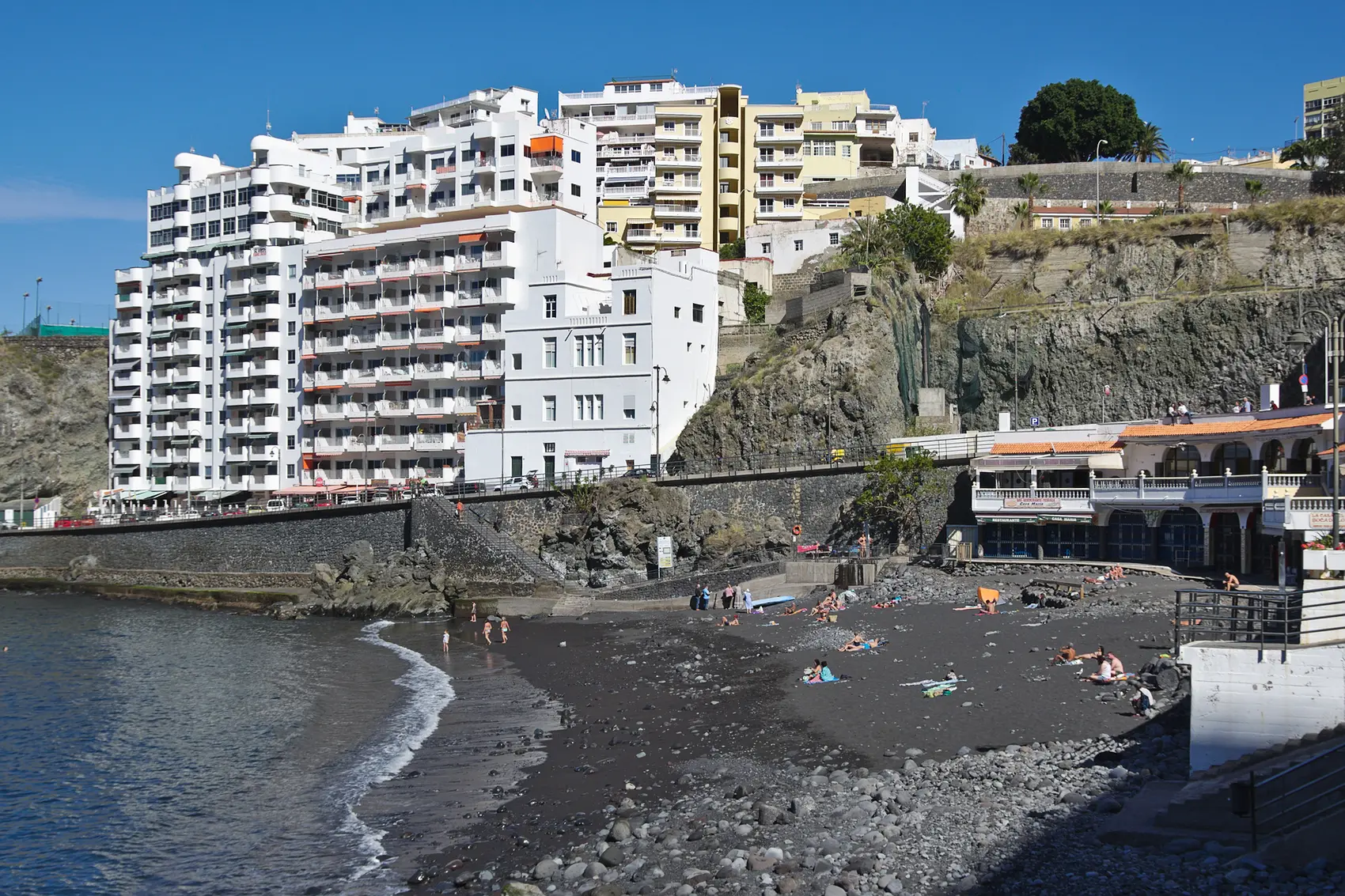
A black-sand beach sheltered by a pier that calms the surf, very popular with northern families at weekends.
Black sand · NorthBefore you go
Three things that change the experience more than the beach itself.
Frequently asked questions
Both. Most natural beaches in the north have black volcanic sand; several beaches in the south, such as Las Teresitas or Costa Adeje, have golden sand brought from elsewhere.
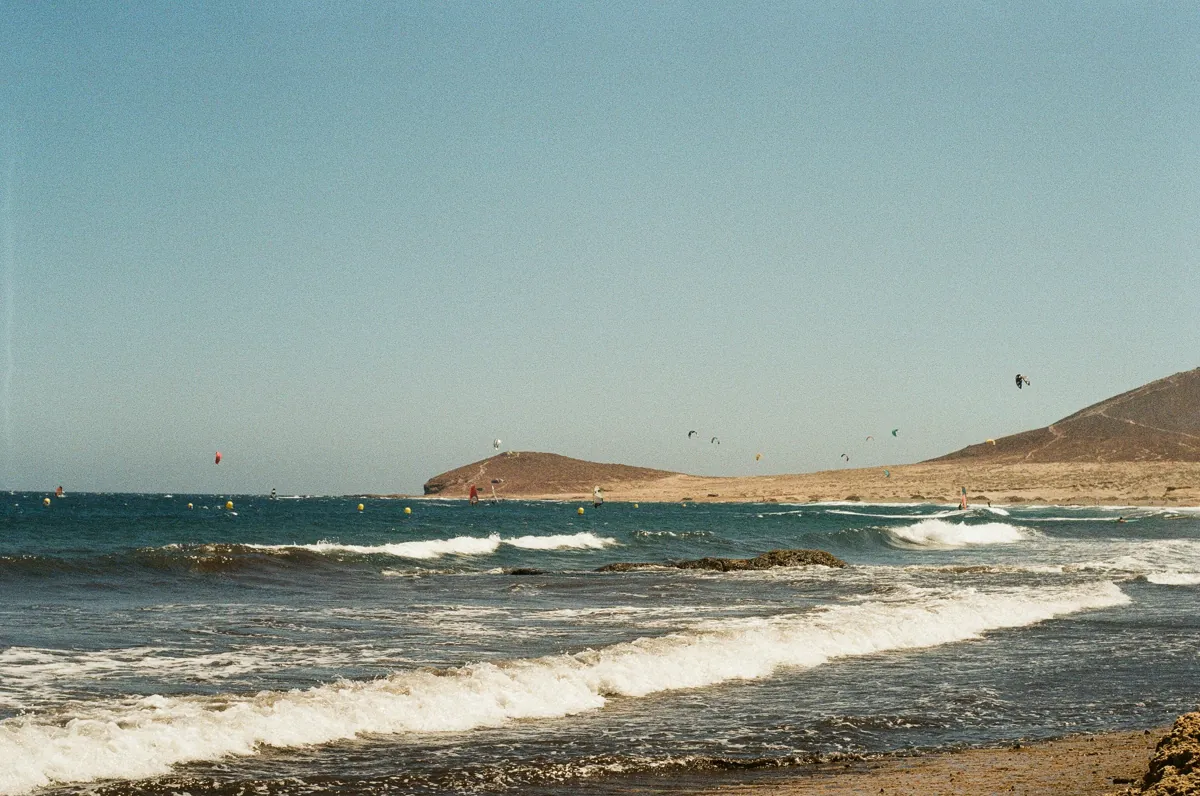
El Médano, in the south, is the benchmark — constant wind almost all year round and specialist schools.
Playa del Duque and Las Teresitas usually have the calmest sea; El Bollullo and the northern beaches in general have bigger waves.
The south has more equipped beaches and guaranteed sun; the north offers wilder, less crowded beaches, in exchange for a somewhat more changeable climate.
Playa de Antequera, in Anaga, can only be reached by boat or on a demanding hike from Igueste de San Andrés — the least crowded beach on the island.
Yes, La Tejita, next to El Médano, has a recognised naturist area at its southern end, and is also one of the least developed beaches in the south.
Yes. At El Puertito de Adeje you can swim with sea turtles right from the shore, with no boat or diving equipment needed. For dolphins and pilot whales, the option is a boat trip from Puerto Colón, Los Gigantes or Las Galletas — they are present all year round. More details in the guide to Tenerife's marine life.
Prefer to plan by area?
The routes-by-area guide organises these beaches alongside Teide, Anaga and the west, depending on how many days you have.
Photo of Playa Jardín: Cayambe, Wikimedia Commons (CC BY-SA 4.0) · Photo of Playa del Duque: Mark Wordy, Wikimedia Commons (CC BY 2.0) · Photo of El Bollullo: Jan Sobotka, Wikimedia Commons (CC BY 4.0) · Photo of Los Cristianos: Wouter Hagens, Wikimedia Commons (CC BY-SA 3.0) · Photo of Las Vistas: Tuxyso, Wikimedia Commons (CC BY-SA 4.0) · Photo of Playa de la Arena: Falk Arnhold, Wikimedia Commons (CC BY-SA 4.0) · Photo of Benijo: Luis Javier García Morales, Wikimedia Commons (CC BY-SA 4.0) · Photo of La Tejita: Jose Mesa, Wikimedia Commons (CC BY 2.0) · Photo of San Marcos: El Grafo, Wikimedia Commons (CC BY-SA 4.0)