
Bring your own gear
A mask and snorkel are enough; fins help you stay buoyant without touching the bottom. Free access from El Puertito beach.
- No cost, no booking
- Dirt car park next to the cove
- Better on weekdays or very early
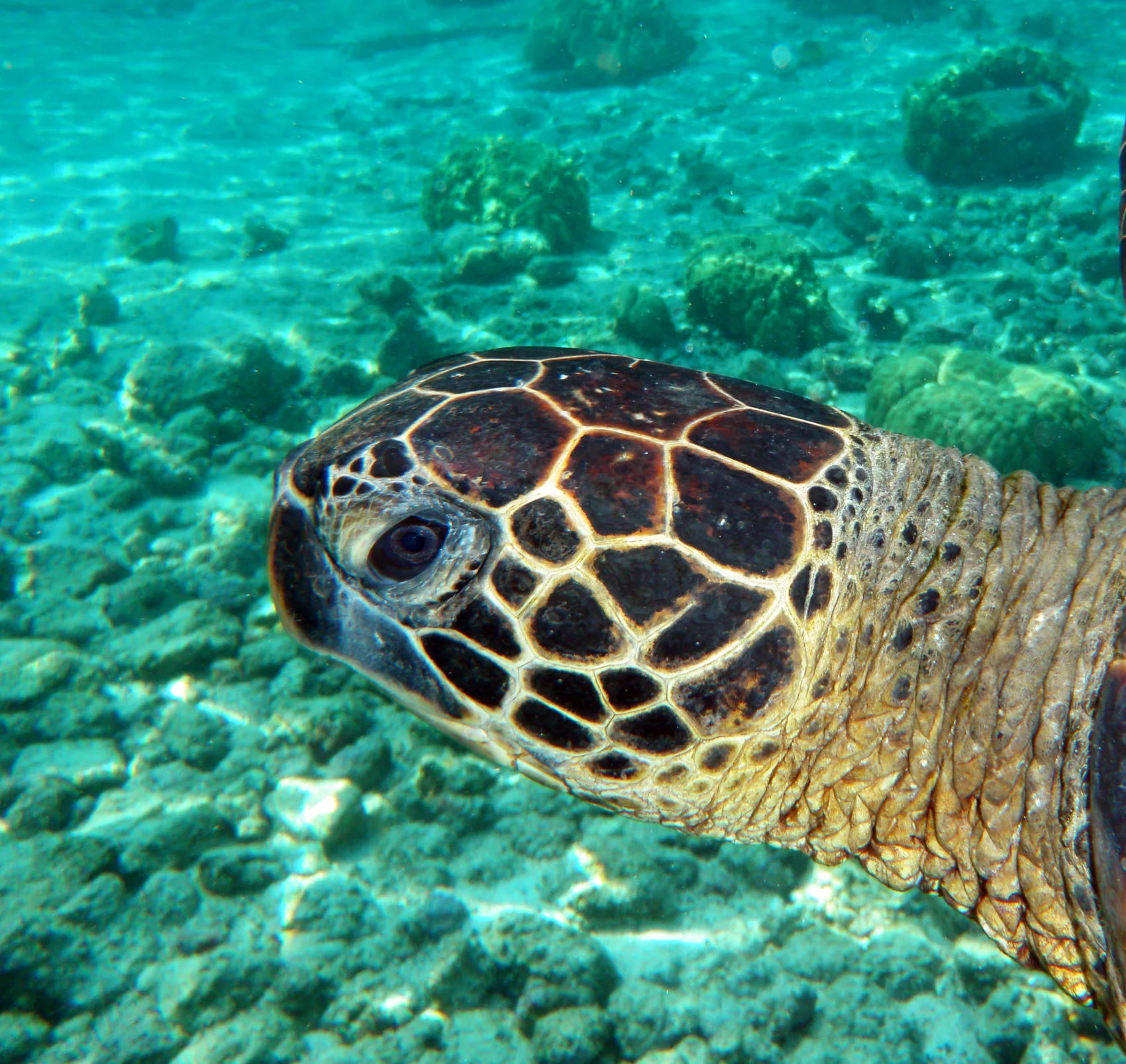
Marine life guide · Snorkelling with turtles
El Puertito de Adeje is home to a population of green turtles that needs no boat or diving tank: just swim a few metres from the shore. Here is what you need to know to see them up close without disturbing them.
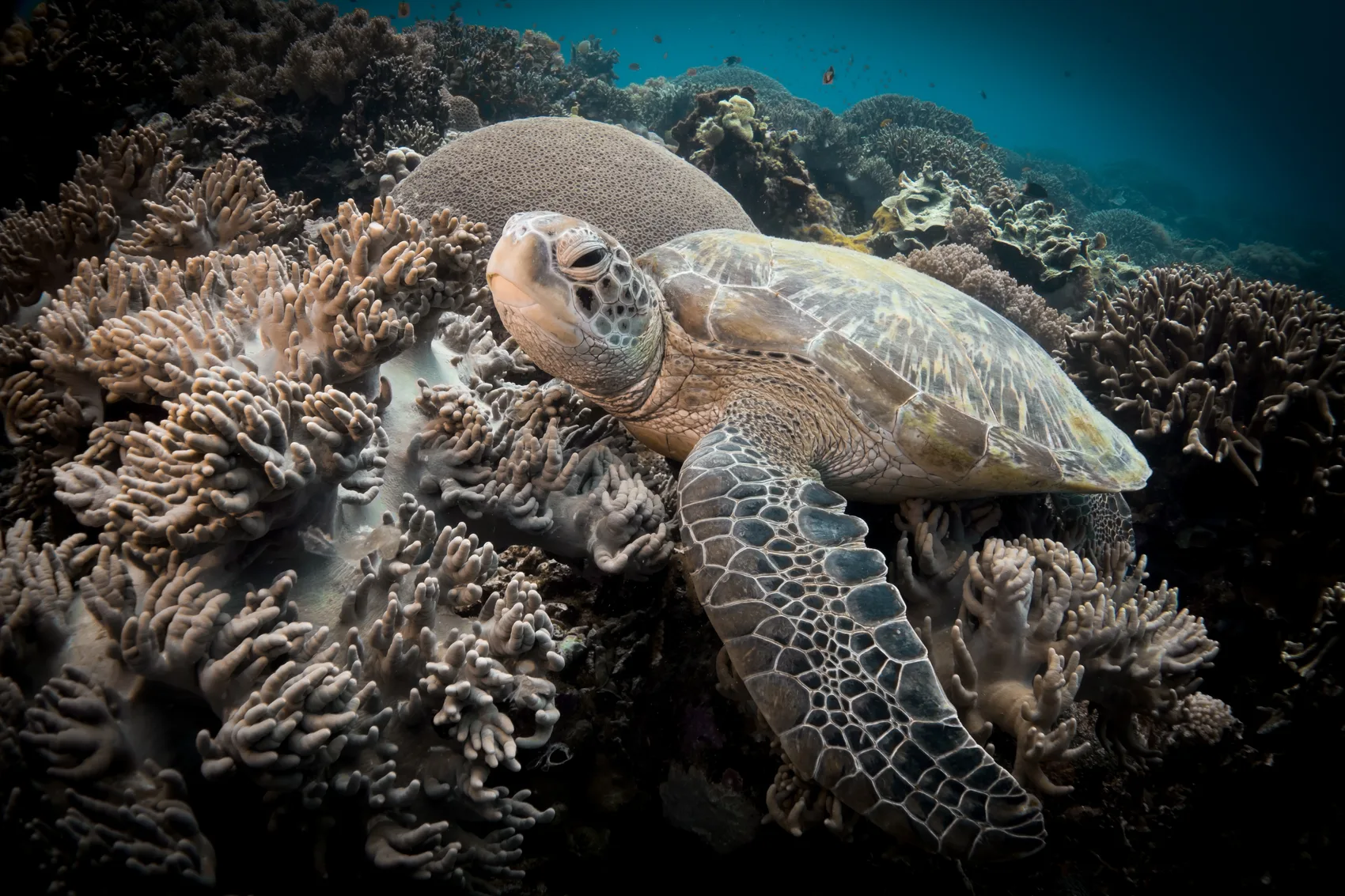
Why there are turtles here
The warm waters of southern Tenerife are a feeding ground for green turtles (Chelonia mydas) and, less often, loggerhead turtles — not a nesting site. They feed on the seagrass meadows that grow on shallow seabeds, which keeps them close to the coast and in view of anyone with a diving mask.
El Puertito de Adeje is by far the easiest place to find them: a sheltered bay where several turtles have grown used to the presence of swimmers.
Where and how to see them
From the best-known bay to alternatives with far fewer people.
A small bay of calm turquoise water on the outskirts of Costa Adeje, with a resident population of green turtles feeding in 4 to 12 metres of water — often shallow enough to see them from the surface without hardly diving down. You reach them by swimming from the small beach, past the area where the boats are moored.
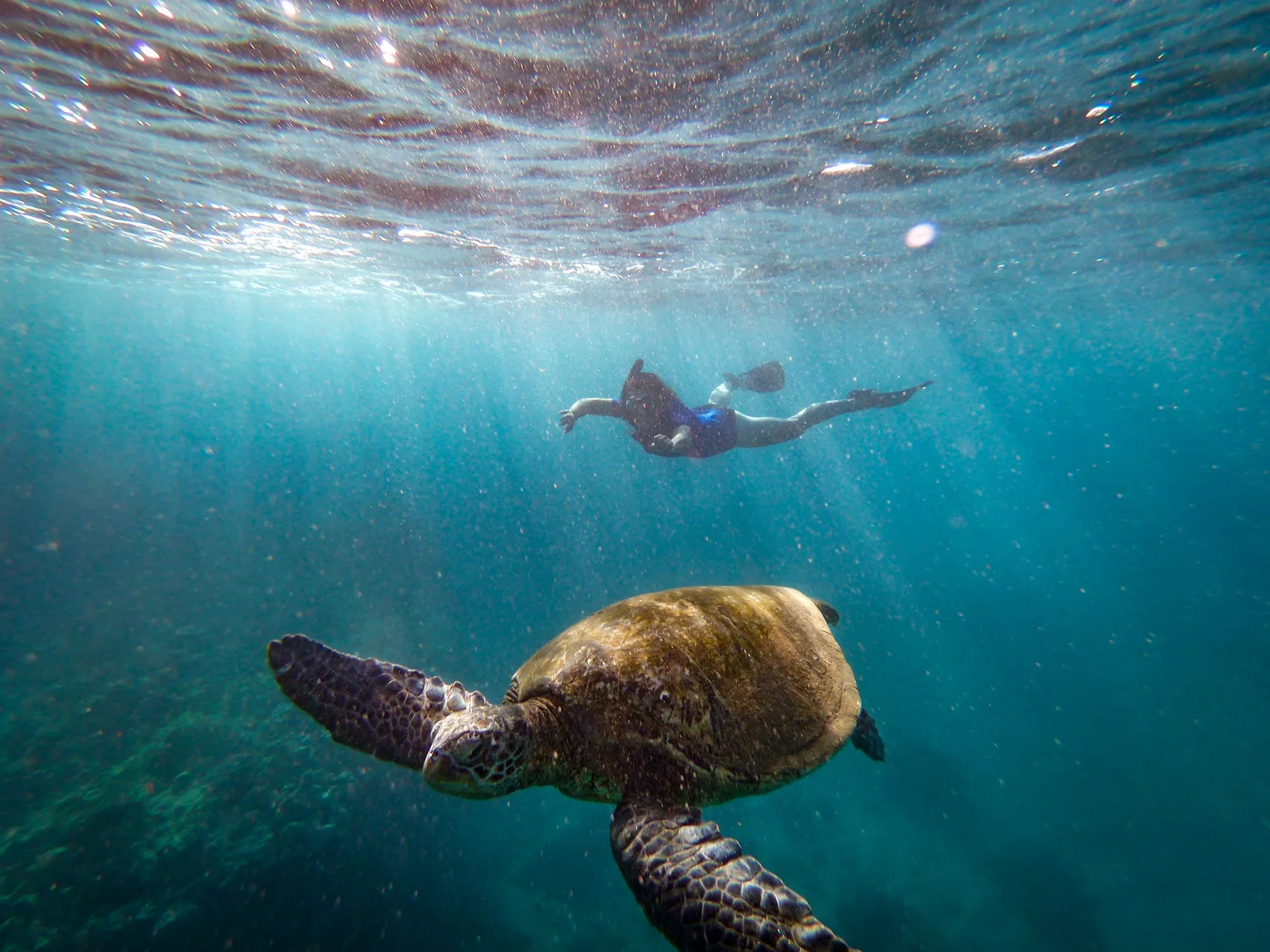
Keep 3–4 metres away and let the turtle set the pace: if it swims off, don't follow. Don't touch it, don't chase it for a photo and don't corner it between you and the surface — it needs to come up to breathe every few minutes. Swim calmly, without kicking too close to the seabed.
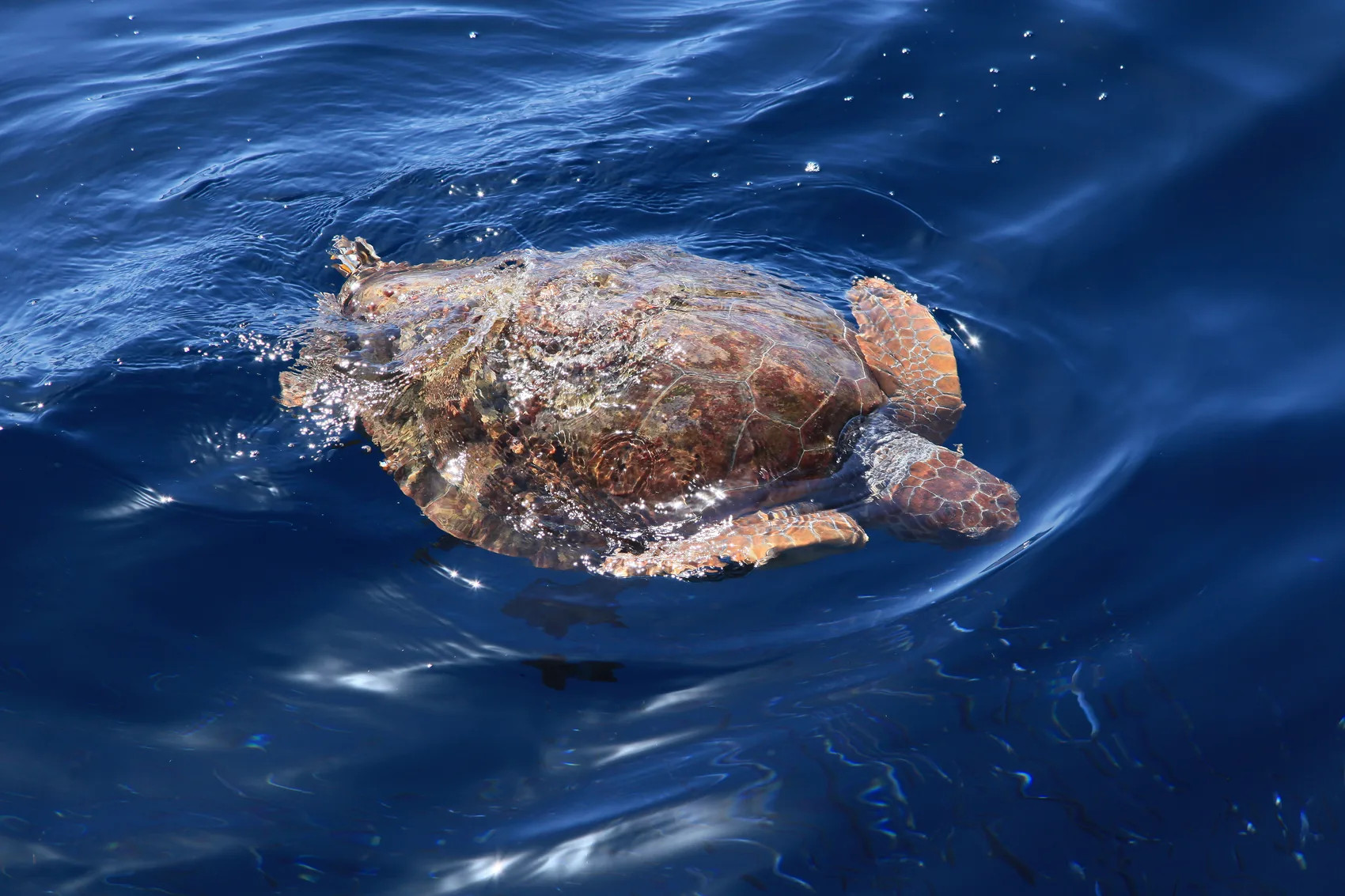
El Puertito isn't the only spot: at Radazul, Las Galletas and Palm-Mar turtles are also seen, more sporadically, with far fewer people in the water. If El Puertito is very busy, any of these three is a reasonable alternative, although without guarantees. At Palm-Mar, some kayak trips also pass through turtle feeding areas — another way to try to see them, without depending only on snorkelling from the shore (more info at Kayak Tenerife).
Sea turtles are a protected species in the Canary Islands. Touching, chasing or feeding them is prohibited and can lead to fines — as well as being exactly what makes them stop approaching swimmers. Observe them; don't chase them.
How to organise it
Neither option guarantees you'll see them, but both work well most days.
Practical information
El Puertito, between Costa Adeje and Alcalá.
A small cove between Costa Adeje and Alcalá, reached by a dirt track from the TF-6212.
Fins are optional but help you avoid touching the bottom. Use oxybenzone-free sunscreen: they feed directly on the seagrass meadows.
Touching, chasing or feeding the turtles is prohibited. Keep 3–4 metres away and avoid flash.
The entry is comfortable for young swimmers with a life jacket, but there is boat traffic near the mouth of the bay — don't lose sight of the little ones.
It fills up by mid-morning in high season. Arriving early solves the parking and improves your chances of seeing turtles.
A couple of simple places right on the seafront at El Puertito for a bite after your swim.
Parrotfish, moray eels and, occasionally, rays share the bay with the turtles.
Visibility is usually somewhat better in spring and summer, with a calmer sea.
Before you set off
Frequently asked questions
Yes. It is a resident population that feeds in the bay all year, not a passing group — although some days are luckier than others.
Yes, they are calm, non-aggressive animals if not disturbed. The only real risk is usually boat traffic near the mouth of the bay.
You can go independently with no problem: all you need is a mask and snorkel. A guided excursion adds convenience, equipment and, sometimes, a combination with whale and dolphin watching.
No. It is a protected species in the Canary Islands and touching, chasing or feeding them is prohibited and can lead to fines.
There is a dirt parking area next to the cove, with limited capacity. It fills up early at weekends and in summer.
Yes, although less reliably: Radazul, Las Galletas and Palm-Mar also record sightings, with far fewer people in the water than at El Puertito.
Next stop
A short boat ride from the coast, hundreds of pilot whales and dolphins live all year in the channel between Tenerife and La Gomera — another way to see wild marine life.
Cover photo: Brocken Inaglory, Wikimedia Commons (CC BY-SA 3.0) · Reef photo: Anna Varona, Wikimedia Commons (CC BY 4.0) · Snorkelling photo: Matt McIntosh / NOAA, Wikimedia Commons (Public domain) · Canary Islands photo: Frank Vincentz, Wikimedia Commons (CC BY-SA 3.0)