
Village and viewpoint
A stroll around the harbour, a terrace with views and a stop at the roadside viewpoint on the way to Masca.
- Duration: 2–3 hours
- No booking needed
- Ideal on the way to Masca or Teno
Places guide · West coast
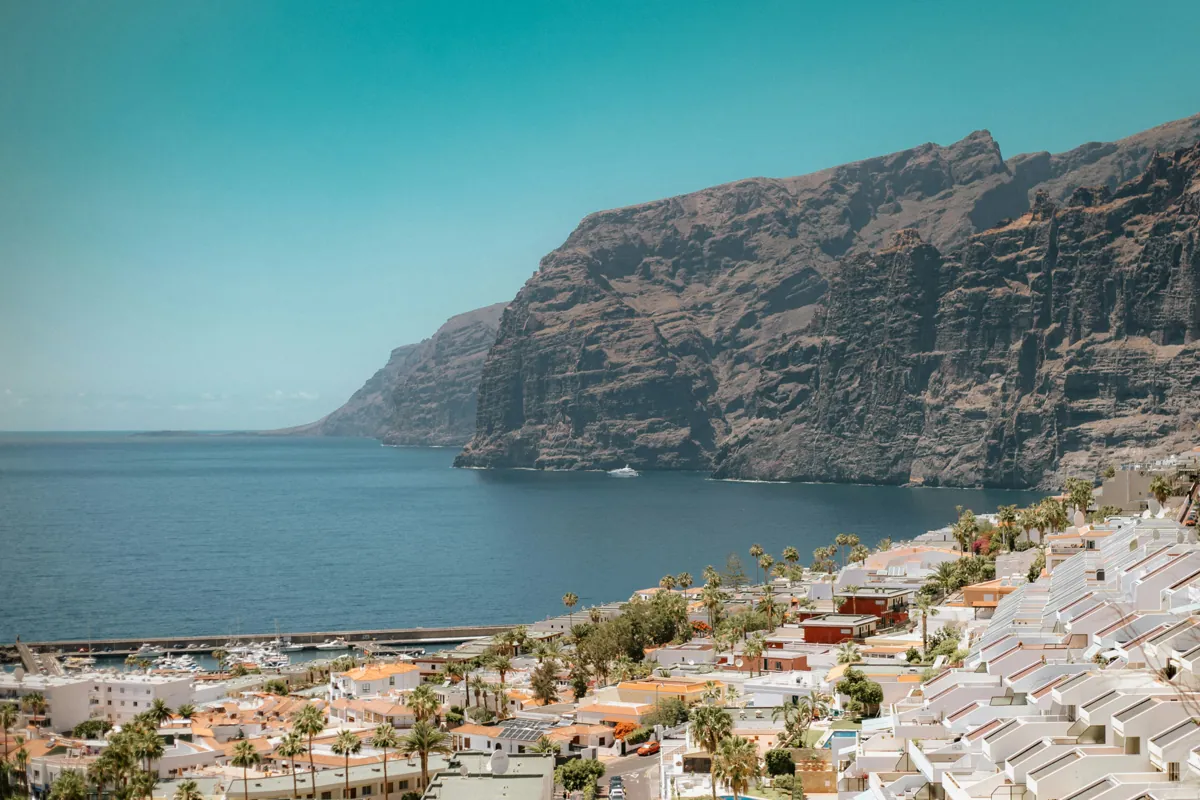
The Los Gigantes cliffs are a wall of volcanic rock rising up to 600 metres above the Atlantic on Tenerife's west coast. Around them are a village, a harbour and, above all, a sense of scale that can only really be understood from the water.
Why it is worth the visit
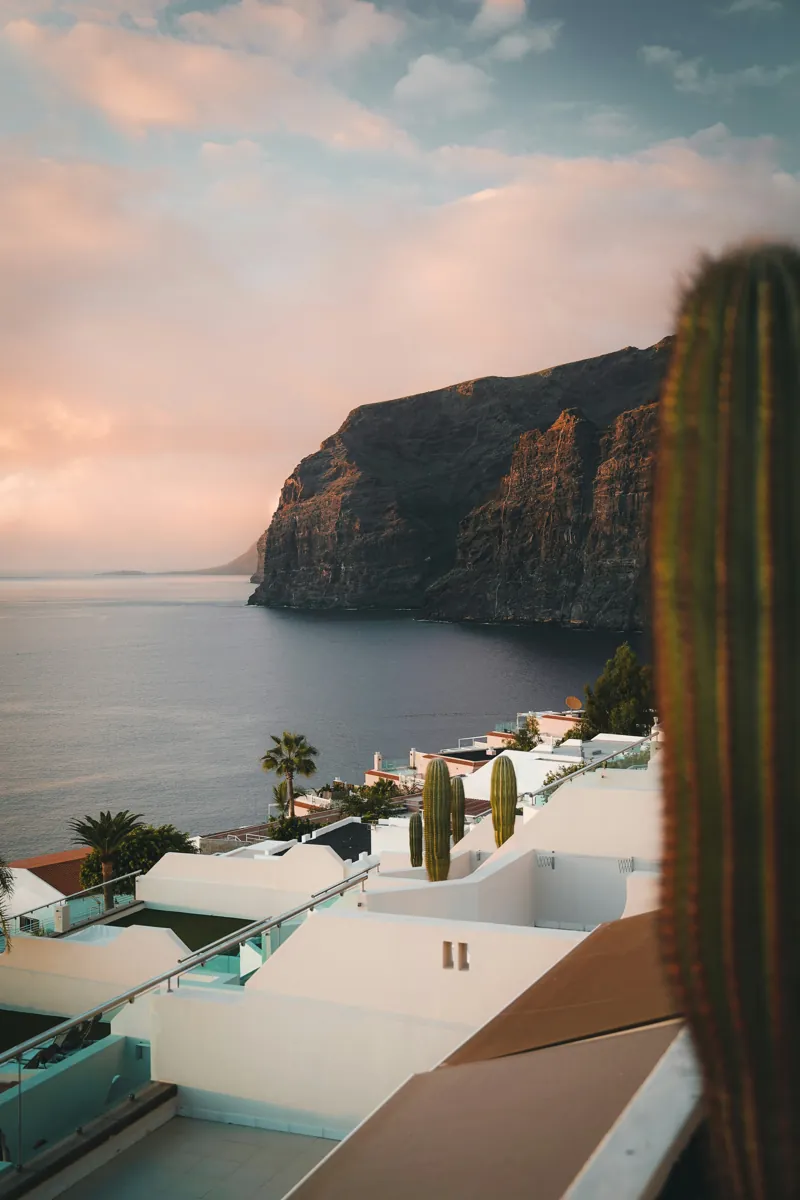
The same volcanic massif that forms Teno and Masca ends here, cut sheer above the Atlantic. It is impressive from the village or the roadside viewpoint, but the real scale of the cliffs is only felt when you approach by boat and sit in their shadow.
It is also one of the best places on the island for whale and dolphin watching: the channel between Tenerife and La Gomera is home to a resident population of short-finned pilot whales and bottlenose dolphins all year round.
What to see
From the village to the sea in a few minutes, with options for a whole day.
The rock wall that gives the place its name. You can see it from the village and the roadside viewpoint, but its real height is only appreciated from the water.
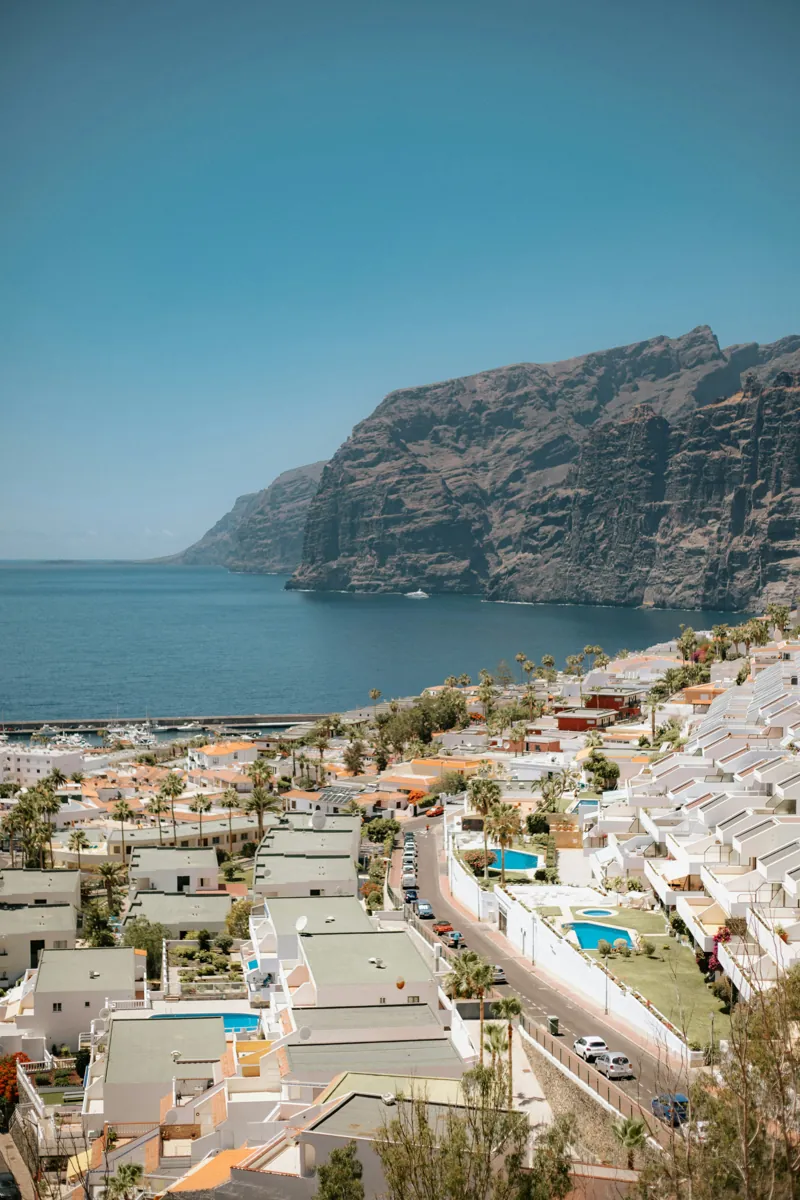
The marina where the boat trips depart from. The village's meeting point, with terraces facing the quay.
Short-finned pilot whales and bottlenose dolphins live year-round in the channel towards La Gomera. Boat trips find them almost any day of the year. A kayak trip with a snorkelling stop that covers part of this coast also departs from the same harbour — see the offer at Kayak Tenerife. Full whale-watching guide →
A few minutes away in Puerto de Santiago, the best black volcanic sand beach in the area, with good facilities.
At the foot of the ravine that runs down from the village of Masca, reachable only by boat or by walking the ravine. Many trips from Los Gigantes pass in front of it.
How to organise it
From a short roadside stop to a whole day on the water.
Bookings
Access to the village and the viewpoint is free.
Boat trips and diving activities fill up fast in high season and at weekends. Book several days in advance, especially if you want a specific departure time or a small boat.
Practical information
West coast, near-guaranteed sun and a little more distance from the tourist south.
The southern motorway to Guía de Isora and then the coast road to the harbour.
Spaces near the marina fill up by mid-morning in high season; there are car parks a little further away.
The Teno Massif shades the clouds coming from the north: the west coast is one of the sunniest and driest parts of the island almost all year round.
Trips usually leave in the morning, when the sea is calmest. The afternoon gives the best views from the viewpoint.
The marina has most of the fresh-fish restaurants, with direct views of the boats and, if you're lucky, a dolphin passing by.
A short stop is enough for the village; add the boat trip if you want to see the cliffs from the water.
Both are five minutes away and round off the visit nicely.
In Puerto de Santiago and Alcalá, very close by, there are natural volcanic-rock pools as an alternative to the beach.
The Masca road starts right here, with bends and views of the ravine.
Before you set off
Frequently asked questions
From land they can be seen well from the village and from the roadside viewpoint on the way to Masca, but their true height is only felt on a boat trip that gets close to the base of the wall.
Turismo de Tenerife describes them as walls of up to 600 metres above the sea, although other sources put the maximum at around 500. The height varies along the cliff line, and the real scale is only felt from the water, at the foot of the wall.
The village itself has little usable beach. The nearby option is Playa de la Arena, in Puerto de Santiago, about five minutes by car, with black volcanic sand and good facilities.
The usual departures to see the cliffs and spot whales and dolphins last between two and four hours, depending on the vessel and whether they include a swimming stop.
They are two neighbouring settlements that have practically merged into one: Los Gigantes around the harbour and the viewpoint, Puerto de Santiago a little to the south, next to Playa de la Arena.
Yes, it is one of the usual points on boat trips, which pass or stop in front of the beach at the foot of the Masca ravine.
The Teno Massif blocks a good part of the clouds coming in from the north, leaving the west coast — Los Gigantes included — among the sunniest and driest areas of Tenerife almost all year round.
Yes, in Puerto de Santiago and Alcalá, a few minutes away, there are natural volcanic-rock pools, a good alternative when the sea is too rough for the beach.
Next stop
Los Gigantes rewards those who get close to the sea: a wall of rock up to 600 metres high, dolphins that appear without warning and a sunset that turns everything ochre.