
Central Icod
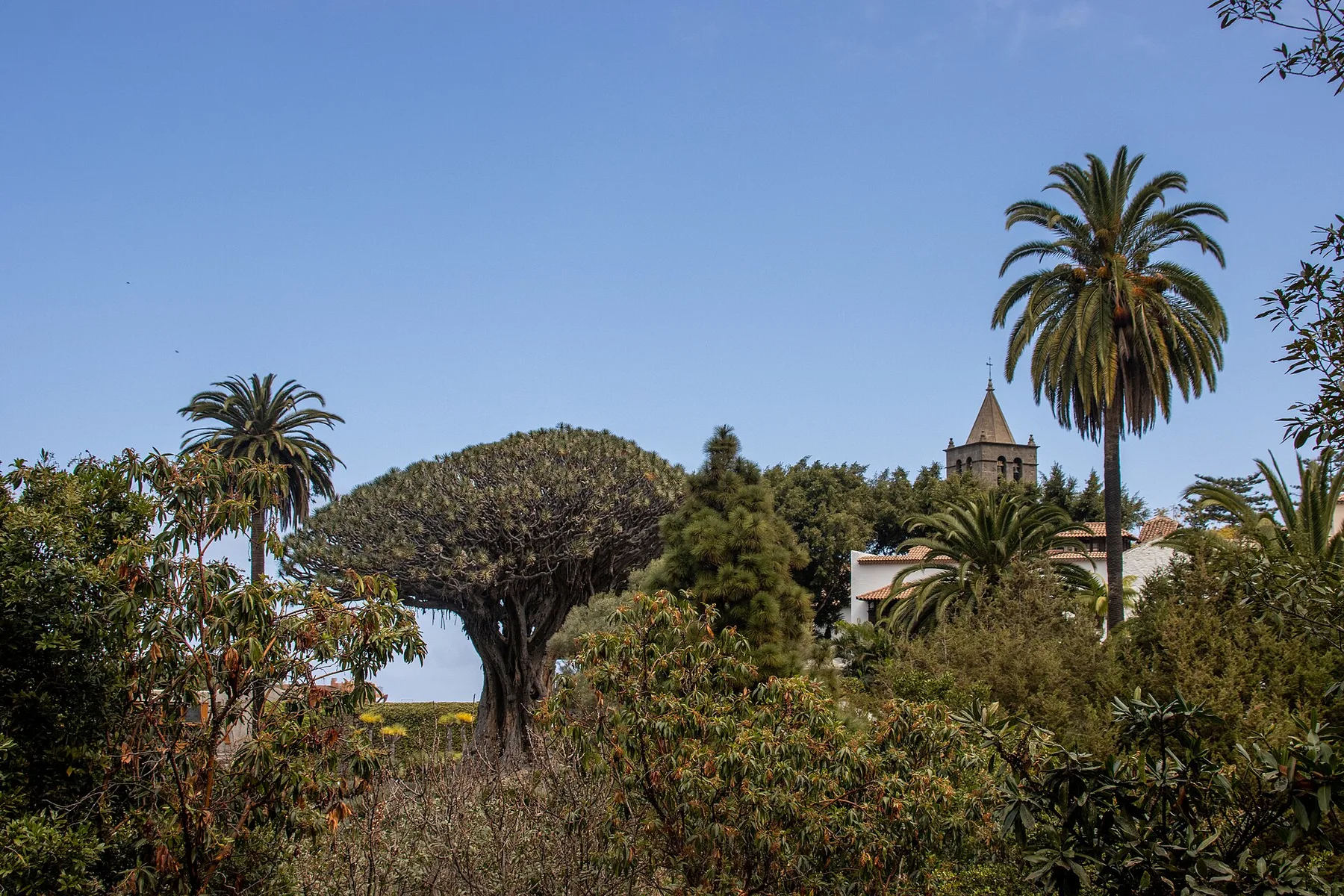
In the north of Tenerife, about 100 m from the church of San Marcos. It is the central stop of our Icod de los Vinos guide.
Guide to the dragon tree and its park · Icod de los Vinos
A dragon tree (Dracaena draco) declared a National Monument in 1917, in the heart of Icod and surrounded by a three-hectare park. Tickets, opening hours, how to get there, where to park and what to see nearby, with data from official sources.
Quick answer
Data checked on 7 October 2026 on the official websites of the local tourist board and Tenerife Tourism.
Short answer: the Drago Milenario stands inside the Parque del Drago, in the centre of Icod de los Vinos. It is open every day with a €5 adult ticket, from 09:00 to 20:00 from April to October and from 09:00 to 18:00 from November to March.
In the north of Tenerife, about 100 m from the church of San Marcos. It is the central stop of our Icod de los Vinos guide.
Dracaena draco, about 18 m tall with a base circumference of about 20 m, a National Monument since 1917. Its exact age is not known.
In the park. If you only want the tree, 30–45 minutes; with the old town and the Mariposario, a morning.
Adults €5, Canary residents €2. You can see the tree from a distance outside without paying, but it is not the same.
History and significance
From growing beside a road to having a whole park around it.
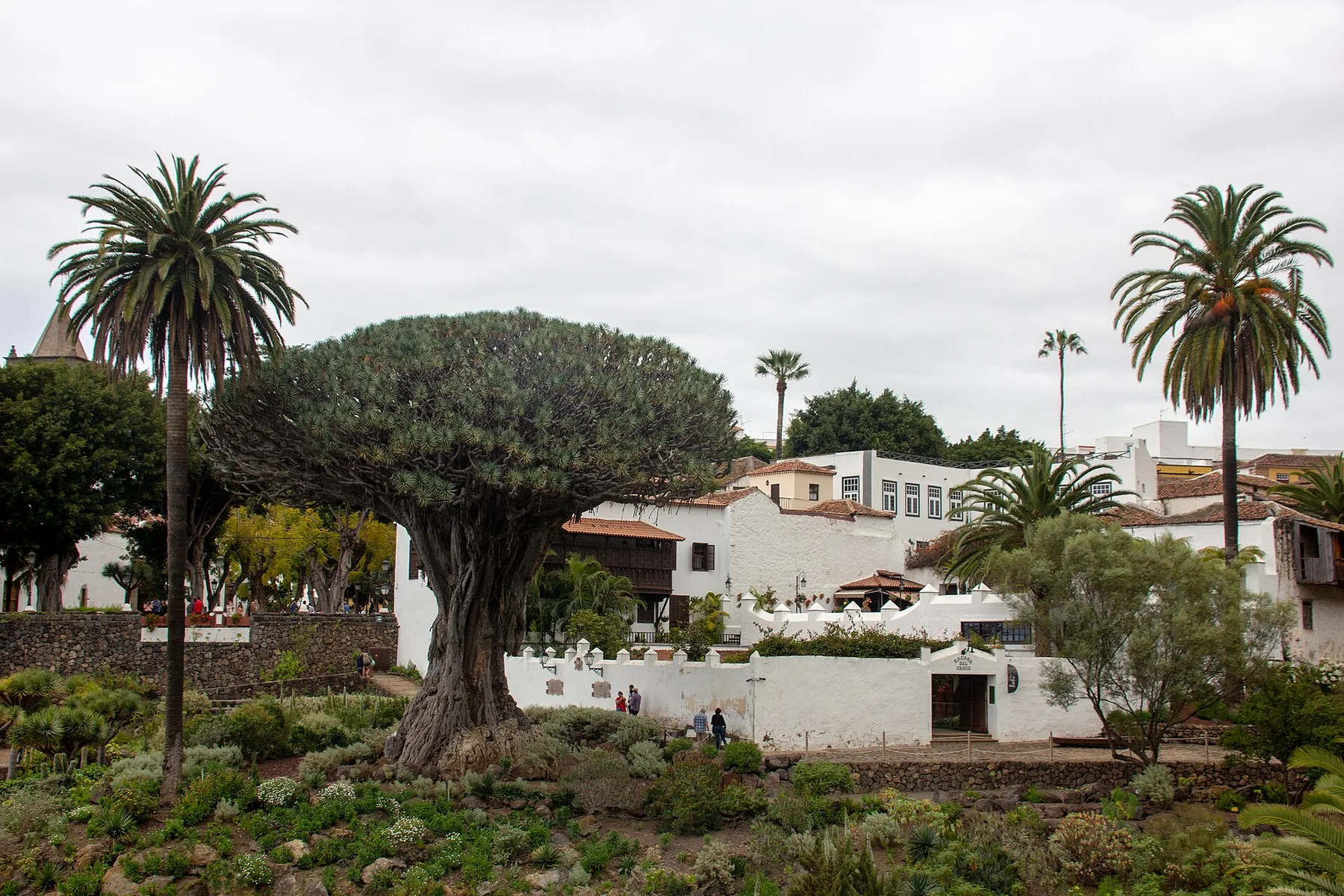
The Drago Milenario is a specimen of Dracaena draco, a monocot with anomalous secondary growth: more a woody herb than a tree in the strict sense. Icod Town Council describes it as the largest and longest-lived known of its species, and it is believed to have been revered by the Guanches, who used its red sap, “dragon’s blood”, as medicine and in their rituals.
According to the Town Council, it is about 18 m tall, with a crown about 20 m across, a trunk circumference of about 20 m at the base and more than 300 main branches. The trunk holds an inner cavity that rises as high as 6 m. It is the symbol of Icod, appears on its coat of arms, and is also considered the plant symbol of Tenerife.
Estimated age
Estimates vary widely. This guide does not present any figure as settled fact.
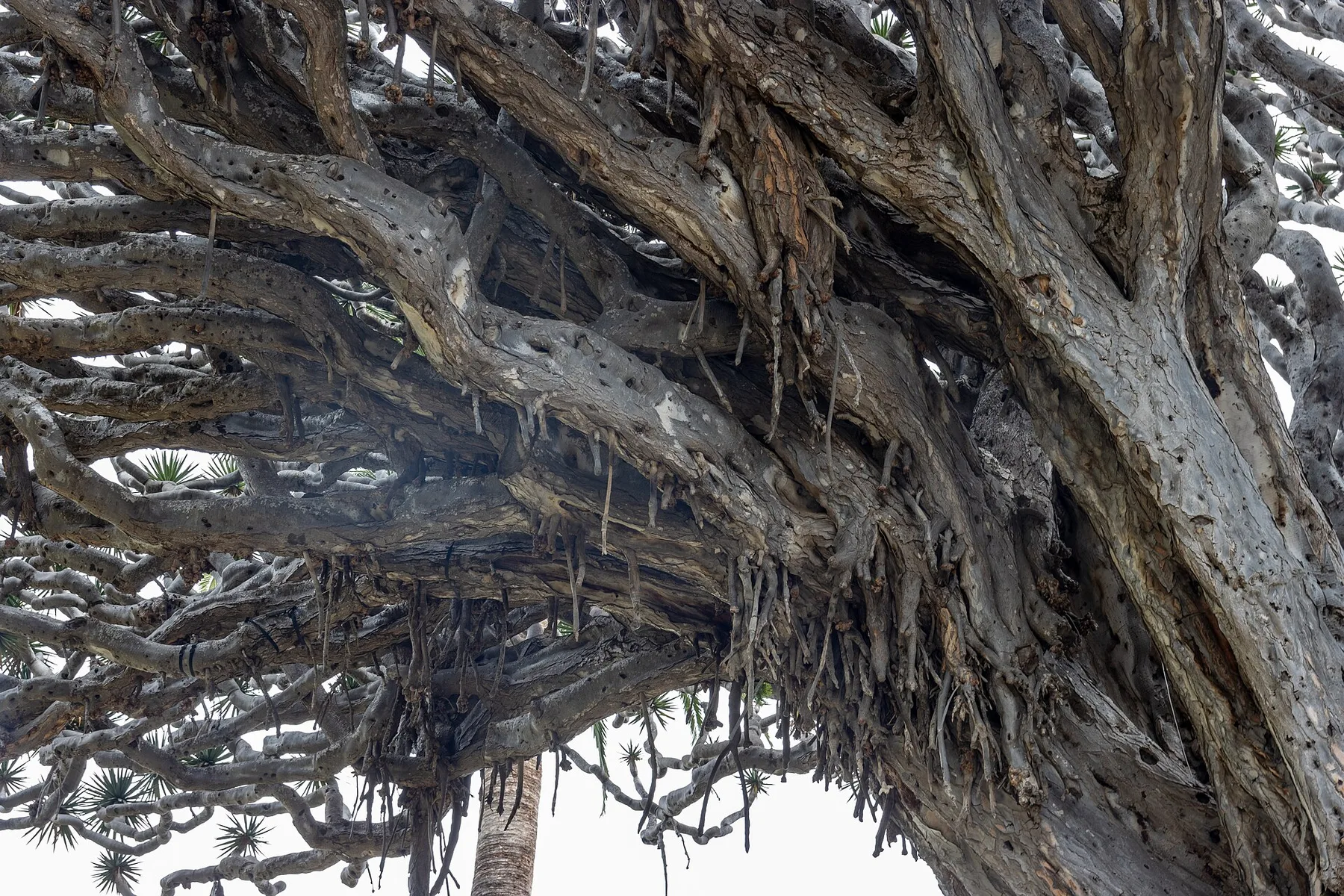
“Millenary” is a nickname, not a measurement. The dragon tree does not form growth rings or renew its bark in a regular cycle, and over time some parts rot or break while others keep growing: what is measured in one of them does not describe the age of the whole plant.
One technique counts the flowering periods, because the dragon tree branches after each flowering, and assigns about 15 years to each. The results depend on the method and on who is counting, which is why published figures span an enormous range.
| Source | Estimate | Caveat |
|---|---|---|
| Tradition and ancient writings | More than 3,000 years | Repeated for a long time; according to the Town Council, no study has been able to confirm it. |
| 1907 study (Zurich Polytechnic) | ~2,500 years | Considered exaggerated by many, for lack of a scientific basis (eldiario.es, 2015). |
| Icod de los Vinos Town Council | ~700 years | With a possible error of 100 to 150 years. It is the estimate the Town Council presents as the most reliable. |
| Icod tourism (municipal portal) | More than 800 years | A popular figure; the page does not explain the method. |
| Flowering count (Rafael Almeida, Canary Botanical Garden) | ~360 years | 24 flowering periods × about 15 years each. The multiplication is ours: indicative only. |
Sources: Icod de los Vinos Town Council (Drago Milenario fact sheet), Icod’s municipal tourism site and eldiario.es (27 September 2015, article on the dragon tree). Consulted on 7 October 2026.
“Several centuries”, with estimates ranging from a little over three centuries to more than eight depending on the method. Any exact figure you read, whether 800, 1,000 or 3,000, is a simplification.
The Parque del Drago
Created in 1996 and designed to walk through the island’s vegetation by altitude zone.
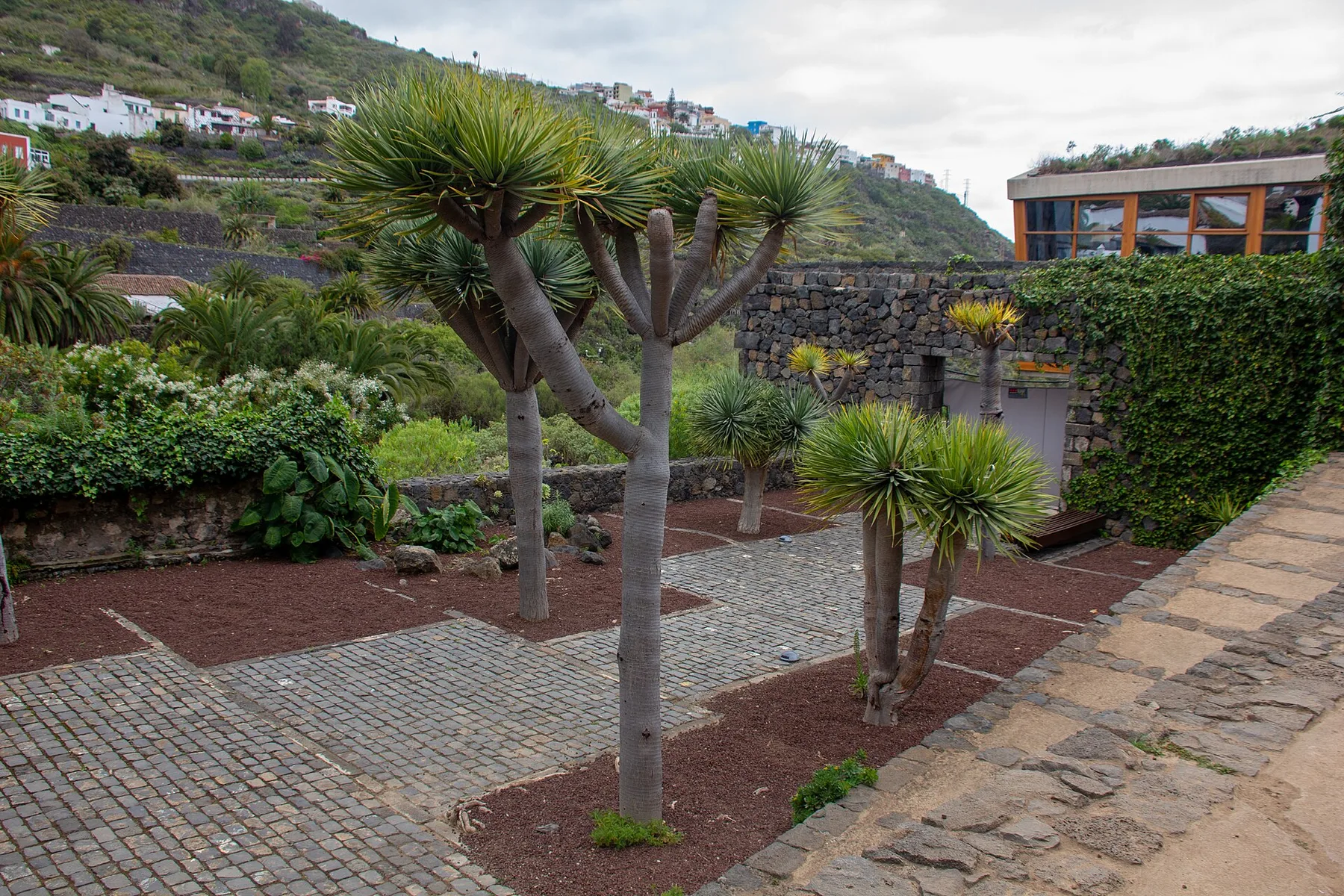
Specimens of different sizes and ages that show how the species grows, from the small dragon tree to the giant.
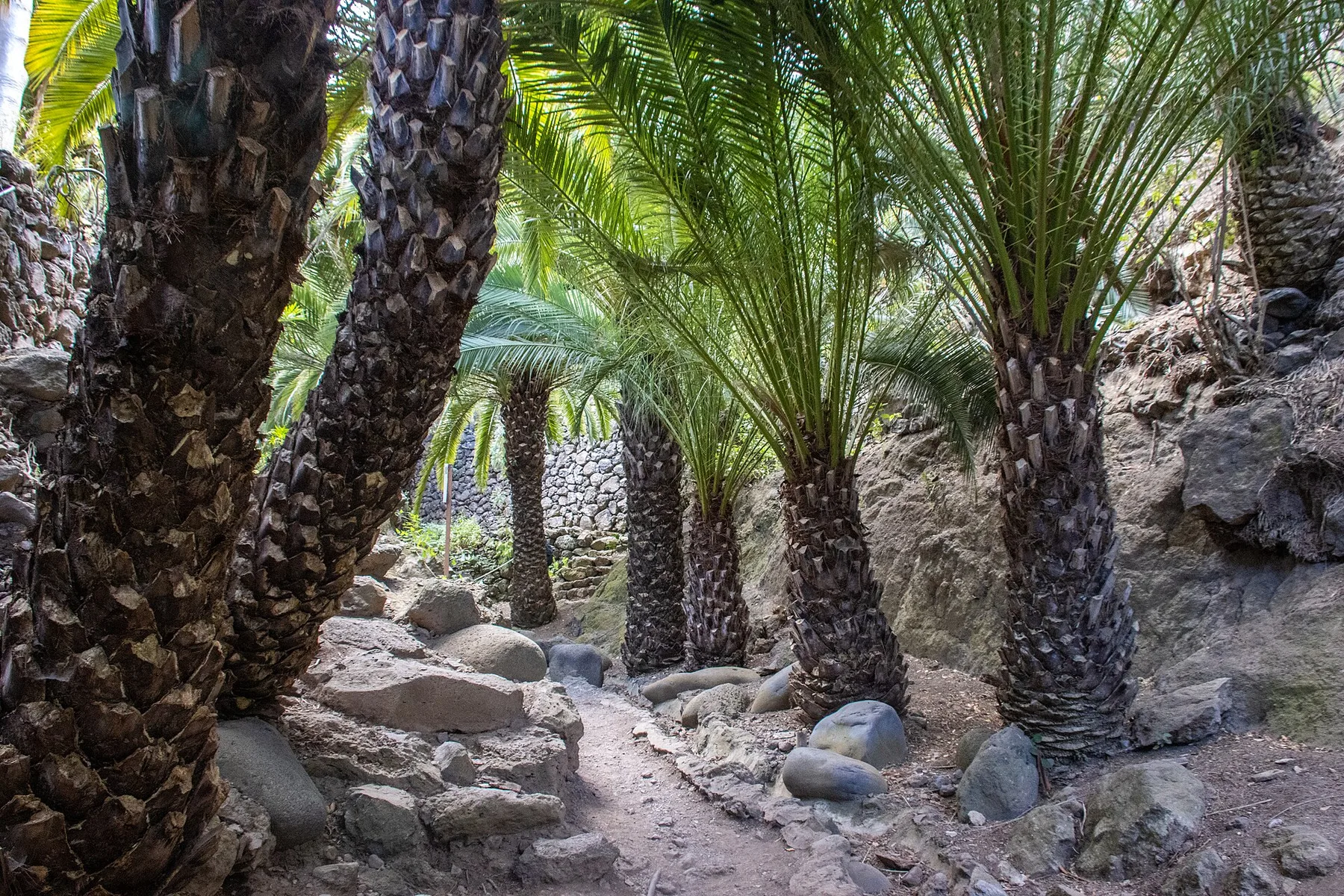
The ravine runs through the park, crossed by two bridges. Along the path, plants are labelled with their scientific and common names, and the vegetation changes by altitude zone: cardonal-tabaibal (succulent scrub) at the bottom, junipers and palms in the thermophilous zone, fayal-brezal (heath) and laurel forest above.
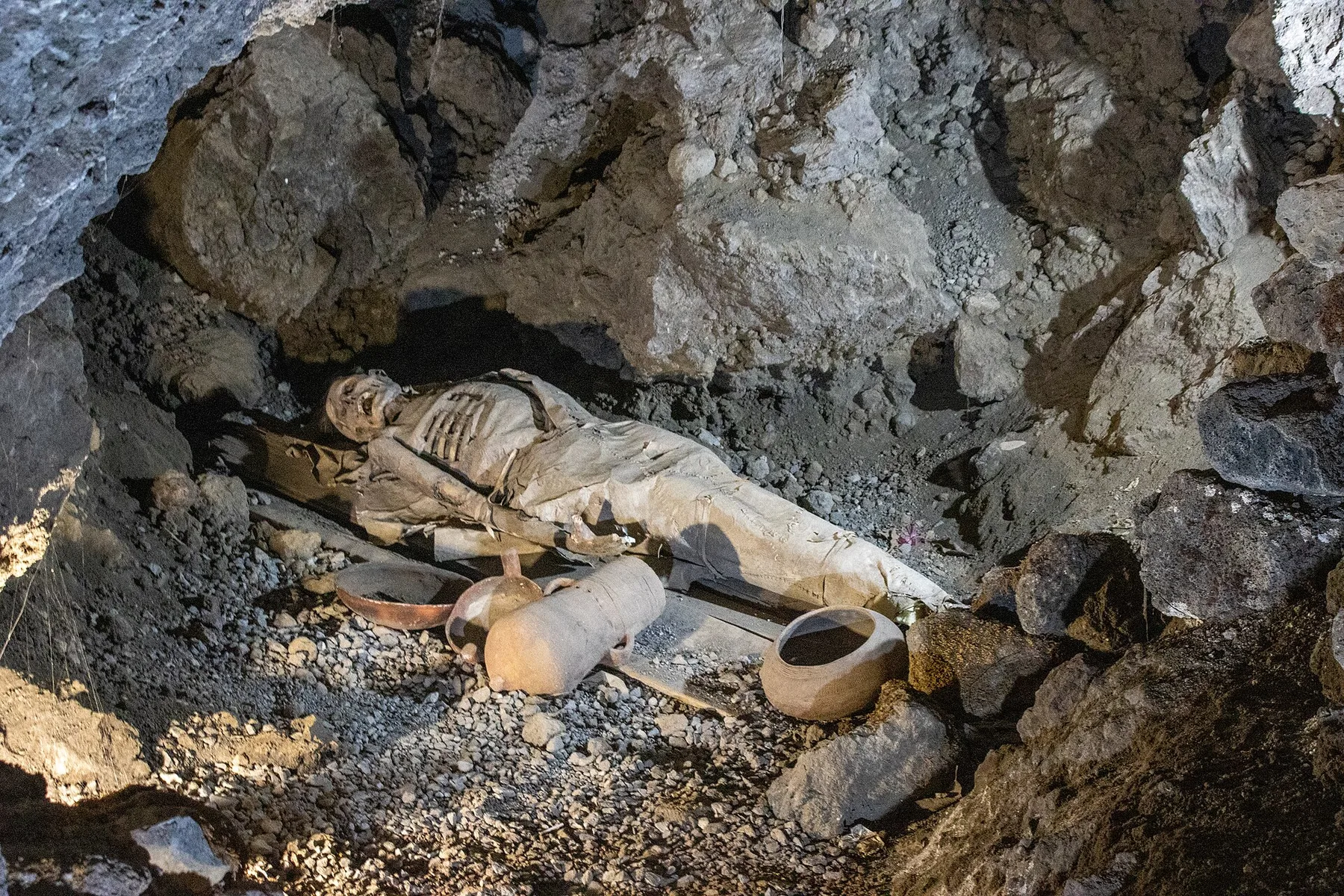
A small volcanic cave with a recreated Guanche mummy burial and an audiovisual on Icod as Guanche territory in the former kingdom (menceyato) of Ycoden.
An exhibition on the trades that built Icod (sawmill, mills, glass, winegrowing) and, in the park, a wine press with a picnic area and some charcoal kilns.
From the highest point you can see the Teide, the Atlantic, the Drago, the centuries-old San Antonio dragon tree and the church of San Marcos all at once. There is a rest area and vending machines.
Dogs on a lead are allowed. Smoking and flying drones are not permitted. The park also offers guided visits for schools and organised groups.
Sources: Icod municipal tourism, Icod Town Council and Tenerife Tourism. The photos date from different times: what the park contains may vary.
Tickets and prices
A single ticket gives access to the park and the tree. The Mariposario is separate.
| Rate | General | Canary residents |
|---|---|---|
| Adults | €5 | €2 |
| Students and pensioners | €3 | €1 |
| Children aged 6 to 11 | €2.50 | €1 |
| Under 6s | Free | Free |
Prices according to Icod’s municipal tourism site and Tenerife Tourism, consulted on 7 October 2026. The Canary resident rate is for people who live in the Canary Islands: bring a document that proves it in case you are asked.
Some resale platforms publish other age bands (for example, adults aged 13 to 65) and other opening hours. They are not the official source. The sources we consulted do not say that you must buy in advance; if in doubt, call +34 922 81 56 85 or email turismo@icodtesa.com.es.
Opening hours
The hours change with the season: longer from April to October.
Every day
Every day
The official website does not publish the last admission time or holiday closures: if you are going close to closing time or on a special day, call +34 922 81 56 85 first. Some third-party listings give different hours (for example, 10:00 in winter): the official ones, above, are the ones to go by.
The Mariposario del Drago (butterfly house) has its own hours: 10:00 to 19:30 every day, with reduced hours on 24 and 31 December (10:00 to 17:00) and on 25 December and 1 January (11:00 to 18:30), according to its website.
Getting there
Icod is in the north, halfway between Garachico and La Orotava.
From Santa Cruz and La Laguna, take the TF-5 (north motorway) and then the TF-42 to Icod. From the south, the fastest route the map calculates goes through Santiago del Teide and El Tanque (TF-82).
Park in the old town and continue on foot: the park is right in the centre (see where to park below).
Titsa publishes these lines with a stop at Icod bus station: the 363 (Puerto de la Cruz–Icod–Garachico–Los Silos–Buenavista), the 106 (Santa Cruz–Icod, weekdays only), the 108 (Icod–La Laguna–Santa Cruz) and the 325 (Puerto de la Cruz–Icod–Santiago del Teide–Los Gigantes).
From the station to the park entrance it is about 600 m, around 8 minutes on foot. From the south you may need to change buses: plan it on titsa.com, because timetables change by season.
| From | Approx. time | Notes |
|---|---|---|
| Garachico | 10–15 min | Via the TF-42, without traffic. |
| Puerto de la Cruz | 30–40 min | Via the north motorway. Puerto de la Cruz guide. |
| Tenerife North Airport | 45–60 min | Via the TF-5. |
| Santa Cruz de Tenerife | 50–65 min | TF-5 to the end and then the TF-42 to Icod. |
| Costa Adeje | 45–60 min | Via Santiago del Teide and El Tanque (TF-82). |
| Los Cristianos | 50–65 min | Same route as from Costa Adeje. |
| Tenerife South Airport | 70–90 min | Via Santiago del Teide and El Tanque. |
Estimated times without traffic: our own calculation with routes over OpenStreetMap data, with a 30% margin for bends and parking. Allow more if there are jams on the motorway. Our north Tenerife guide helps you link several stops.
For the entrance, follow the signs for the Parque del Drago: the sources give different addresses (Plaza de la Constitución, 1, on the municipal tourism site; calle Las Angustias, 1, on the ticket-sales website), both a few metres apart.
Where to park
The old town is compact and fills up by mid-morning. Best to arrive early.
| Car park | Type | Rate | Walk to the entrance |
|---|---|---|---|
| Parking del Drago | Underground | Paid | ~4 min |
| Parking Víctor | Surface | Paid | ~5 min |
| Car parks to the north (3) | Surface | No fee in OSM | 6–7 min |
| Car park to the east | Surface | No fee in OSM | ~8 min |
Location and type of car park according to OpenStreetMap (crowdsourced, unofficial data); walking times are to the park’s pedestrian entrance. Rates do not appear in official sources: you pay at each car park. Always follow the signs.
If you arrive mid-morning, when tour groups tend to turn up, do not circle the nearby streets: use the car parks to the north and walk down. More about the town in our Icod de los Vinos guide.
Free viewpoints
You can see it from outside, but from a distance and only partly.
Several travel guides name the Plaza de Andrés de Lorenzo-Cáceres, next to the church, as the place to see the tree without entering the park. It is free and in the centre, next to bars and terraces.
OpenStreetMap marks two viewpoints outside the enclosure, on the Plaza de la Constitución side, about 45 m from the trunk. They are the closest ones that do not require a ticket.
We have not been able to check on site how much of the tree is visible from each point, or whether there are works or changes. What is official: the park’s own viewpoint, the one that brings the Teide, the Atlantic and the Drago into a single view, is inside the enclosure and requires a ticket.
Accessibility
Put plainly: the park is not accessible for wheelchairs.
Tenerife Tourism states that the Parque del Drago is not accessible for wheelchairs. OpenStreetMap also marks the pedestrian entrances as not accessible (checked in July 2026).
The park has paths, bridges over the ravine and a cave with stairs. There is no official information on pushchairs: with so many slopes, a baby carrier is more comfortable.
See the tree from outside (see above) and visit the Mariposario, which its website declares accessible. Next to the square there are free public toilets that OpenStreetMap marks as accessible.
For specific questions, the municipal tourist office answers on +34 922 81 56 85. The old-town streets are cobbled and hilly, something to bear in mind if you follow the Icod route on foot.
Best time and hour
It opens every day. What changes is the hour and the light.
The safest bet is to go when it opens (09:00) or late in the afternoon: tour groups tend to arrive mid-morning, as we explain in the Icod guide. That is our recommendation, not official visitor-flow data.
From April to October it is open until 20:00, which gives you slack in the afternoon. From November to March it closes at 18:00: set off in good time and do not leave the park for the end of the day.
Icod is on the north side, with more cloud and humidity than the south. Check the AEMET forecast for Icod before you go, especially if you want to see the Teide from the viewpoint.
The park sometimes programmes cultural and environmental activities (in 2025 it hosted screenings from the Canary Islands International Environmental Film Festival). Check the official municipal tourism website in case one coincides with your date.
What to see nearby
Everything is a few minutes from the Drago.
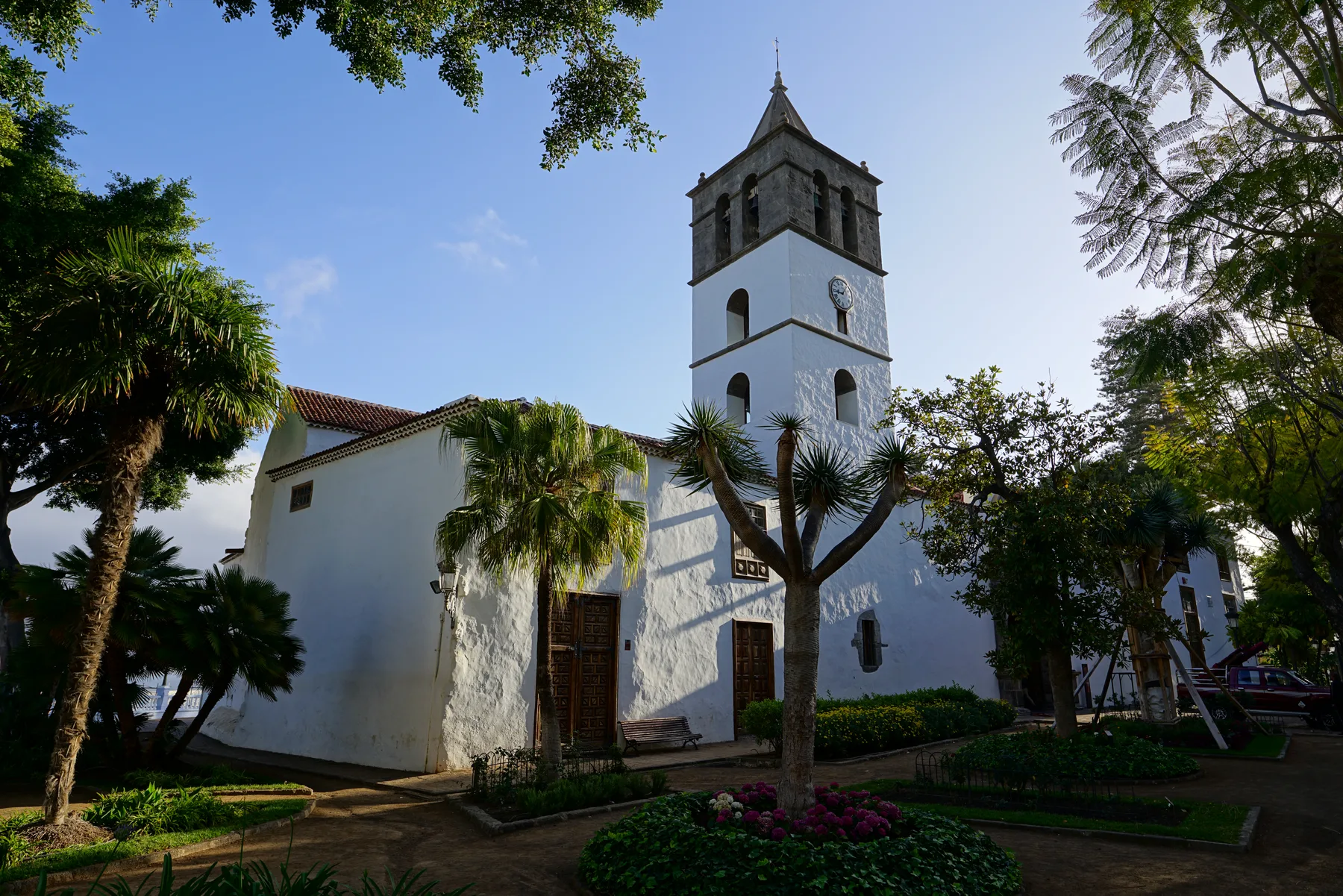
The Plaza de Andrés de Lorenzo-Cáceres, the church of San Marcos and streets lined with manor houses with wooden balconies. You can walk it in a couple of hours.
Icod de los Vinos guide →A glazed tropical garden with more than 800 free-flying butterflies. Open every day from 10:00 to 19:30. Its website lists €11 for adults, €9 for Canary residents, students and pensioners, and €8 for children aged 3 to 12; the municipal portal shows somewhat lower figures, so confirm on arrival. Its website declares it accessible.
A good fit if you are travelling with children or the day dawns rainy.
Mariposario website →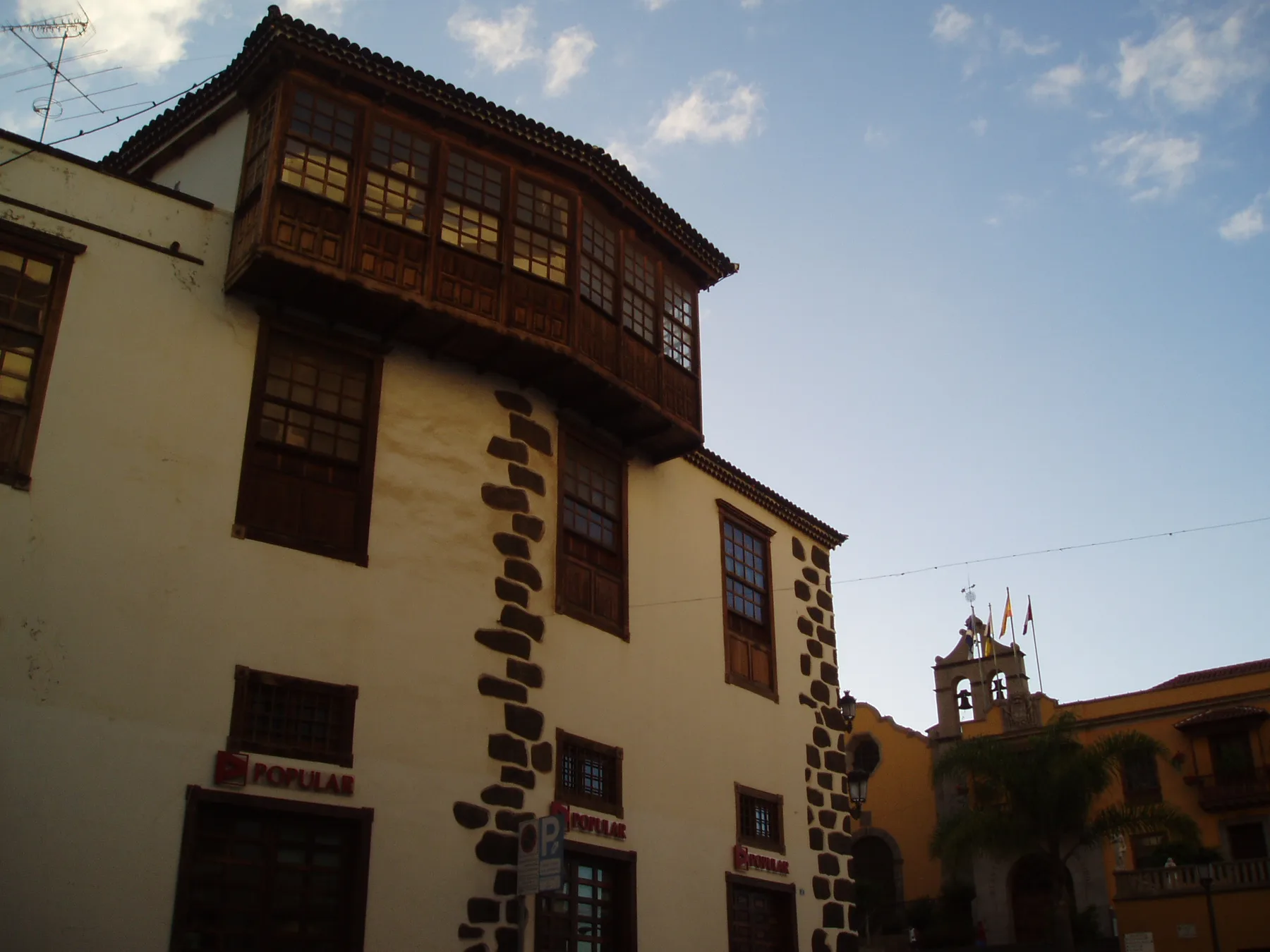
The longest volcanic tube in Europe, visited only with a guide and with a ticket bought in advance on its website. The visitor centre is at calle Los Piquetes, 51. Book before you go and, if you have a slot, combine it with the Drago the same day.
Cueva del Viento guide →The village rebuilt after the 1706 eruption, with natural pools and an old town beside the sea. It is the natural continuation of the route west.
Garachico guide →Half-day route
About 3–4 hours, with the Drago, the Mariposario, the old town and an unhurried lunch.
Before the groups arrive. The Parking del Drago is the closest option; the car parks to the north are the no-fee alternative, a 6–7 minute walk away.
The tree, the dragon tree nursery, the ravine, the Guanche cave and the high viewpoint for seeing the Teide and the Atlantic.
130 m on foot from the entrance. A short, cool stop if there are children or the sun is strong.
The Plaza de Andrés de Lorenzo-Cáceres, the church of San Marcos and the surrounding streets. See the Icod guide if you want to add wineries or more stops.
Bars and restaurants serving Canarian food next to the square; a good moment to try the local malvasía wine.
If you have booked a slot at the Cueva del Viento, this is the moment. If not, carry on 10–15 minutes to Garachico and continue along the north of Tenerife.
Map
Park, entrances, car parks, bus station and viewpoints.
Schematic plan drawn from data © OpenStreetMap contributors (ODbL licence). The paid enclosure is shown with a dashed border. Positions are approximate.
Frequently asked questions
Quick answers with the checked data.
In the centre of Icod de los Vinos, in the north of Tenerife, inside the Parque del Drago and about 100 m from the church of San Marcos. The municipal tourism site gives the address as Plaza de la Constitución, 1 (Casa de los Cáceres). For the town in general, see our Icod de los Vinos guide.
According to the municipal tourism site, general admission costs €5 for adults, €3 for students and pensioners and €2.50 for children aged 6 to 11; under-6s go in free. Canary residents pay €2, €1 and €1. Prices consulted on 7 October 2026.
It opens every day: from 09:00 to 20:00 in summer (April to October) and from 09:00 to 18:00 in winter (November to March), according to the municipal tourism site and Tenerife Tourism. The last admission time is not given.
Nobody knows exactly. Dragon trees do not form growth rings, and estimates run from about 360 years (flowering count) to more than 800, taking in the 700 years, with a margin of error of 100 to 150, given by the Town Council. Older figures of more than 2,000 years could not be confirmed. The nickname “millenary” is traditional, not a measurement.
From a distance, yes. Several travel guides name the church square as a point from which you can see the tree without entering, and OpenStreetMap marks two viewpoints by the fence, about 45 m from the trunk. To see it up close, with the Teide in the background from the high viewpoint, you have to enter the park.
Between 45 and 60 minutes to walk the park at a relaxed pace (tree, viewpoint, dragon tree nursery, ravine and Guanche cave). If you only want the tree, 30–45 minutes. With the Mariposario and the old town, allow a morning or 3–4 hours.
The Parking del Drago is underground and paid, about a 4-minute walk from the entrance. There are surface car parks with no fee (according to OpenStreetMap) north of the old town, about 6–7 minutes on foot. They fill up by mid-morning: best to arrive early.
Titsa publishes lines 363 (Puerto de la Cruz–Icod–Garachico–Buenavista), 106 (Santa Cruz–Icod), 108 (Icod–La Laguna–Santa Cruz) and 325 (Puerto de la Cruz–Icod–Los Gigantes) with a stop at Icod bus station, about 8 minutes on foot from the park. Check timetables on titsa.com.
Tenerife Tourism states that the Parque del Drago is not accessible for wheelchairs. It has paths with steps and slopes, and there is no official information on pushchairs. You can see the tree from outside and visit the Mariposario, which its website declares accessible.
Yes, according to Tenerife Tourism pets are allowed as long as they are on a lead. Smoking and flying drones are not permitted in the park.
Yes, it is a common combination. The Cueva del Viento is about 8–10 minutes away by car, but it is visited only with a guide and prior online booking; Garachico is about 10–15 minutes away. Start with the Drago first thing and book the Cueva del Viento before you go.
The official website sells tickets online, but the sources we consulted do not say that buying in advance is compulsory. For questions, the municipal tourist office phone number is +34 922 81 56 85.
Official sources
Consulted on 7 October 2026. Prices and hours change: confirm before you go.
The Drago is only the beginning: Icod, the Cueva del Viento, Garachico and Puerto de la Cruz fit into a single route.
Photo of the Drago Milenario and the church of San Marcos: Mike Peel, Wikimedia Commons (CC BY-SA 4.0) · Photo of the tree from the park: Mike Peel, Wikimedia Commons (CC BY-SA 4.0) · Photo of the dragon tree’s branches: Mike Peel, Wikimedia Commons (CC BY-SA 4.0) · Photo of the dragon tree nursery: Mike Peel, Wikimedia Commons (CC BY-SA 4.0) · Photo of the ravine with palm trees: Mike Peel, Wikimedia Commons (CC BY-SA 4.0) · Photo of the Guanche cave: Mike Peel, Wikimedia Commons (CC BY-SA 4.0) · Photo of the church of San Marcos: Redeemer, Wikimedia Commons (CC BY-SA 4.0) · Photo of the old town: Panarria, Wikimedia Commons (CC BY-SA 3.0) · Map: © OpenStreetMap contributors (ODbL), own drawing